Wat mengs du? - Why going out is an act of strength for me
Switch to German for original article
Listen to this article
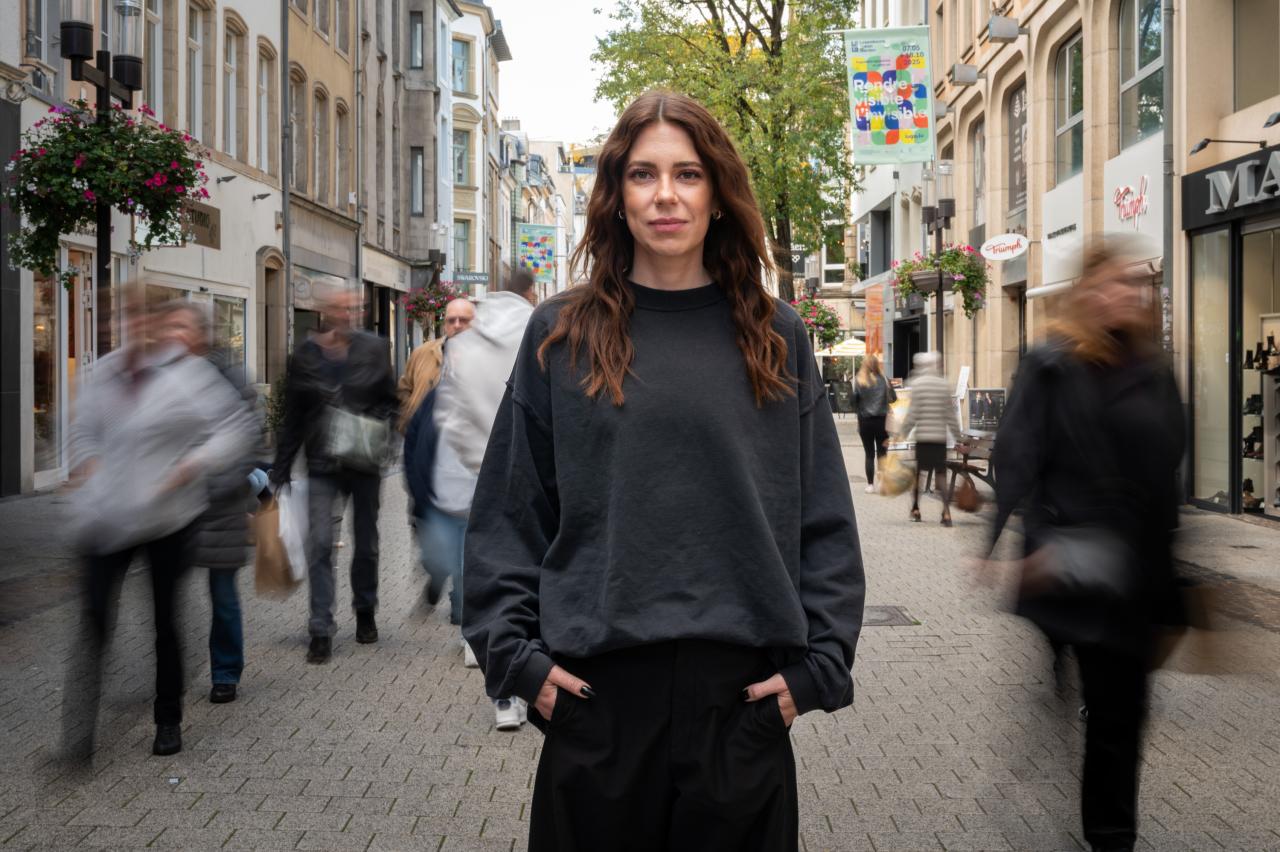
"Every time I go somewhere, a huge number of questions runs through my head." That's what Marielle Molitor says. In this "Carte Blanche", she speaks from the perspective of a person with a disability about what these questions are and what she wishes from our society.
Can I park there? Is there a disabled parking space? What do I do if it's occupied? At what time do I need to leave in case I can't find a parking spot nearby? Will people have to wait because of me? Where is the entrance? How do I get into the building? Are there stairs, and do they have handrails? Are the toilets on the ground floor or on another floor? Is there an elevator? Do I need a key? Might it even be broken? Are there places to sit? Won't there be too many people? Will there be pushing and crowding? Will I have to explain my needs to someone? Can I ask someone for help without making a fuss? Do I have enough energy for all possible scenarios? Shouldn't I just avoid all of this and stay at home, saving a lot of physical and mental energy?
I am 35 years old and was diagnosed at the age of seven with a progressive neuromuscular disease. I can walk, though not far; I can stand, though not long; and I only need a wheelchair for long distances, for example at the airport. I haven't always had to ask myself these questions, because my illness has manifested itself differently at different stages of my life. With a progressive disease, it is normal that new questions arise over time: partly because the illness progresses, partly because of bad experiences.
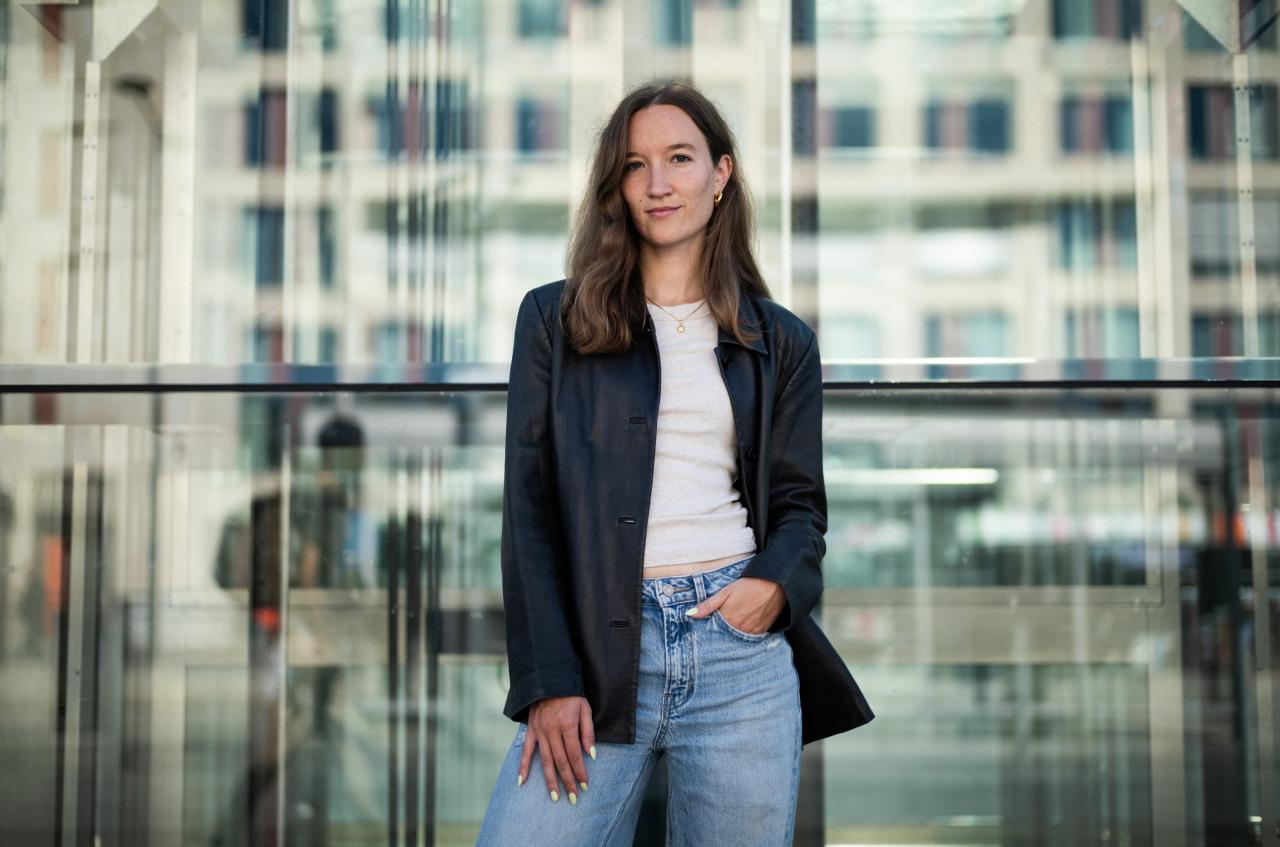
Marielle Molitor
-
Marielle Molitor studied German and Luxembourgish studies, and has been a Luxembourgish teacher for nine years.
In her free time, she mostly enjoys calm hobbies: watching series, reading, painting, cuddling her dog, going out to eat or drink… basically anything that allows her to sit down.
It was only this year that she reconciled with sports: since discovering aqua gym, a sport that is rather uncommon in her age group. She is by far the youngest in the group.
Marielle also spends a lot of time online. Sometimes she raises awareness on Instagram about ableism and ableist injustices, but that also takes energy - energy that, with a chronic illness, is not always available.
However, she has no intention of stopping drawing attention to these injustices.
All these thoughts have become natural to me, and I am aware that there are many of them. And still, I am lucky. A person in a wheelchair cannot participate at all if there are stairs and the elevator is broken. People with other disabilities ask themselves completely different questions. But we all have something in common: we can never be sure what barriers we will face when we leave our home, our safe space. It often happens that I choose the option that tires me the least: staying at home. Why? I encounter no unknown barriers, I don't get the feeling of making things difficult for someone, and I avoid microaggressions and, above all, all those questions. That does not mean that I never worry at home about being a burden to my closest people, nor that I never encounter obstacles in daily life because of my disability, my body, my character, my fears, etc.
So what am I worried about, if staying home is so easy? Well, humans need social contact, and new experiences are good for us. Routines are comfortable, but change is beneficial.
"Dare to go outside, to show yourself, to communicate your needs, be 'inconvenient' for others sometimes, say something and even complain when something doesn't work."
Marielle Molitor
I wrote this text to raise awareness of this aspect – these thoughts and worries – of living with (my) illness and disability. Taking part in social life is a fundamental right, and an accessible place is not a luxury.
It is also meant as a message encouraging more understanding for these hurdles. I don't want to be applauded every time I leave the house. I wish for more patience and understanding, and for efforts to identify and remove barriers so that disabled people have fewer fears and worries when out and about, do not feel like a burden, and can look forward to going somewhere nice. Anyone can become disabled at any moment through an unfortunate accident, and at the latest in old age, we all rely on an environment where we can move safely. So why not fight now to remove these barriers?
Being 'ableist' and ableism
-
"Ableist" is the adjective form of "ableism". That disabled people face discrimination in daily life is well-known: a building entrance consisting only of stairs, an elevator that remains broken for weeks or months, other forms of exclusion, etc. But ableism goes further than "just" hostility toward disabled people.
The word combines the English adjective "able" and the suffix "-ism", and comes from the U.S. Disability Rights Movement of the 1980s.
Society takes as its norm a body that is "able," i.e., "normal". An ableist perspective assumes that everyone is like that, and the world is designed for this standard. Disability is then considered "less valuable".
This approach extends hostility toward disabled people, within a capitalist system, to the evaluation of abilities that a society defines as norms. These notions of "normality" devalue disabled people because they are seen as those who are "not able".
Whether we like it or not, we have all been socialized in an ableist system and are all ableist, including disabled people themselves.
Finally, a message to people who are in a situation similar to mine: dare! Collecting new experiences is so important! Dare to go outside, to show yourself, to communicate your needs, be "inconvenient" for others sometimes, say something and even complain when something doesn't work. I know it's not always easy. Sometimes you don’t have the energy, but if one day you do, do it. Our society is ableist in the way it socializes people, and only in this way can we draw attention to our concerns. Only in this way will our needs reach those who ultimately make decisions. A lot has happened in recent years, but there is still progress to make.
Wat mengs du?
-
Once a month, we give space to a voice - someone who is an expert in a field, through their studies, profession or personal experience: experts in everyday life, an illness, a particular life situation - or simply a clear opinion.
Do you have something to say? Then send us your idea for an opinion piece to journal@journal.lu.