Wat mengs du? - Push dech! the desire to learn
Switch to French for original article
Listen to this article
In Luxembourg, one young person in twelve leaves school without a diploma. As the new school year begins, Marc Faramelli, co-head of social advocacy at the Fédération des acteurs du secteur social (Fedas Luxembourg), reflects on his own educational journey, explains the need for a change in mindset and sends a message of hope to young people themselves.
It must have been when I was 16 or 17 that I started to find classes at the Athénée de Luxembourg increasingly boring and began to 'drop out' of the curriculum and sleep in class, it didn't interest me any more. Out of curiosity and boredom, I experimented with beer, spirits and cannabis, which I strongly advise against mixing, by the way. After that, I had to repeat several years and my father was always nagging me to at least get my school-leaving certificate and stay in school. Looking back, I was probably going in the wrong direction by enrolling in the mathematics section with Latin as an option. I was a spoilt, failed kid, who had nothing to complain about.
I didn't experience domestic violence or abuse, nor did I have to flee armed conflict or live in precarious conditions, which are unfortunately common fates for students these days with invisible destinies that are underrepresented in our society.
Yet I was unhappy, having become an amorphous creature, very shy and not very successful in my love life either. Just as I was about to drop out of school, a former classmate came into the schoolyard from the School of Business and Management and suggested I join him there, since their courses would be much more practical and I would like them.
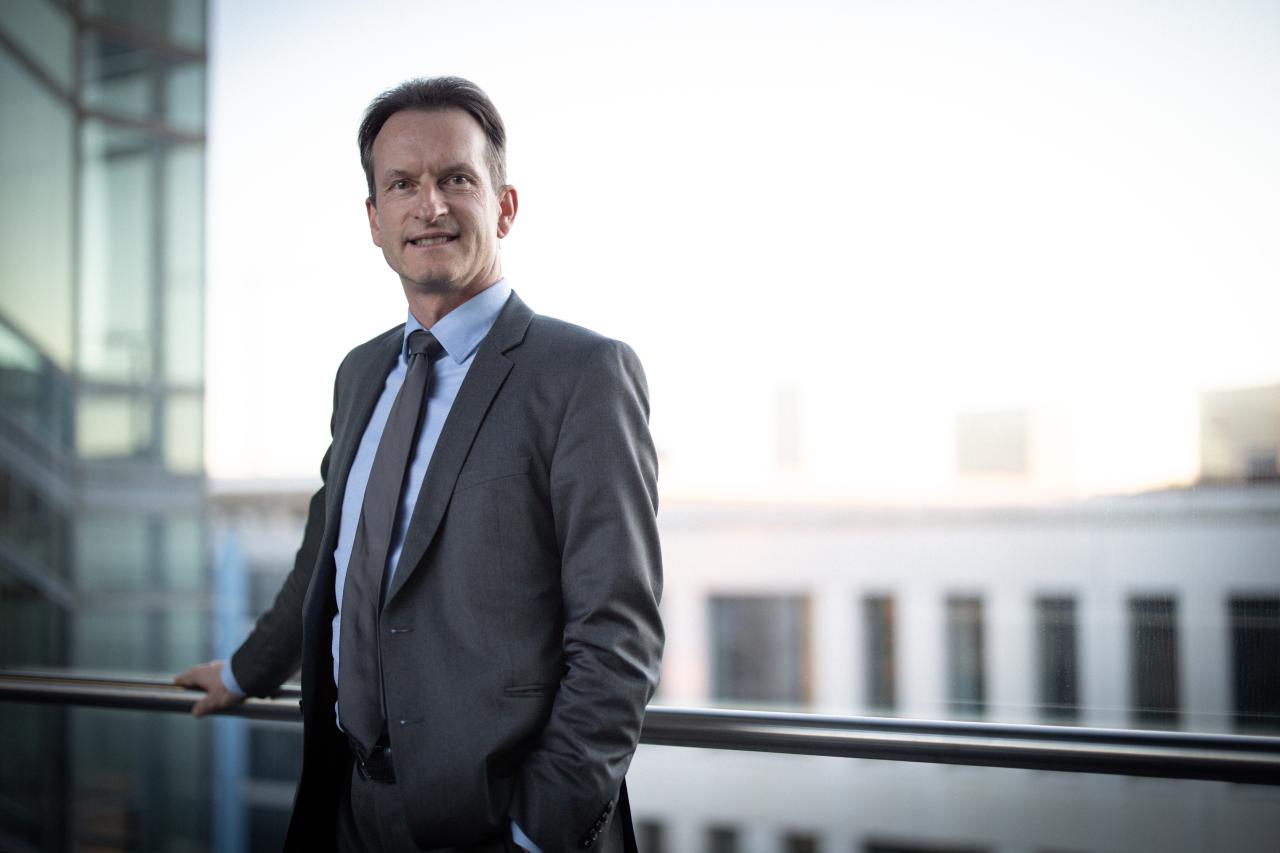
Marc Faramelli
-
Marc Faramelli is 56 years old. He graduated from the School of Business Administration at the University of Liège in 1996. After working in auditing at a world-class firm for a few years, he trained as a chartered accountant and co-managed a trust company with his father in Heisdorf. Shortly after his father's death, he realised that he no longer enjoyed the work and decided to change direction.
He then became involved with the non-profit organisation Solidaritéit mat den Heescherten (Solidarity with Beggars), on behalf of which he defended a petition to the Chamber of Deputies. On that occasion, he noted that the large organisations depend on financial support from the State and, in his words, "don't want to bite the hand that feeds them, so they aren't too political in their advocacy on behalf of their beneficiaries".
Since January 2025, he has been co-head of social advocacy at the Fédération des acteurs du secteur social (Fedas Luxembourg). The employers' federation currently has some 200 members working in a variety of fields, including child and family support, the social and solidarity economy, disability, seniors' and youth clubs.
This is one of the ever-present problems in education: it often means having to make choices in the dark. Seeing no other alternative, I found myself in 12e CG2 at the age of 20. It was the first time I'd had to turn on a computer without even knowing where. Financial mathematics – the value of money over time – economics, drawing up a tax return… in fact, it all made me want to learn again, so much so that I passed my 13th year with flying colours, which reopened the door to university studies. After failing my first year at the University of Liège as an exchange student, where I behaved more like a tourist, I only got the final push after my mother persuaded my father to give me one last chance.
"Just when you think all is lost, a little ray of hope appears out of nowhere."
Translation of an unattributed German saying
After completing my bachelor's degree, I worked in financial auditing and then, as a chartered accountant, managed a small fiduciary with my father. By the beginning of 2022, I had grown dissatisfied with my work schedule. My job involved helping people pay as little tax as possible, for example on their capital gains from property speculation. But at the same time, I also had family clients who were taking on 30-year debts to buy such properties. So, after careful consideration, I decided to give up this line of work.
As part of my new challenge as co-head of social advocacy at Fedas Luxembourg, I am now motivated by the desire to learn more about the social sector every day, so that I can better defend the rights and interests of the beneficiaries of the federation's members.
Looking at the current state of education, the number of initiatives that are being proposed to prevent and counteract early school-leaving is impressive.
What do you think?
-
Once a month, we give space to a voice - someone who is an expert in a field, through their studies, profession or personal experience: experts in everyday life, an illness, a particular life situation - or simply a clear opinion.
Do you have something to say? Then send us your idea for an opinion piece to journal@journal.lu.
However, many policies are implemented without proper monitoring, without adequate evaluation mechanisms and without sufficient efforts to value each learner in order to support them throughout their school career. Exclusion mechanisms at various levels – both at school and in private life -, rigid, ill-adapted standards and a lack of understanding of the diversity of pathways can contribute to failure at school.
I know from my own experience that students in difficulty, trapped in their own abyss, cannot see beyond their cup of tea (or coffee or beer) and will at some point have to accept a helping hand.
Can we really expect all student to conform to a single model of success? Other countries offer a variety of alternative systems that are more flexible and more humane. Why not mobilise the synergies and expertise of players from the various sectors surrounding the learner in order to improve the overall learning conditions?
"A change in mindset can only work if all stakeholders, parents and, in particular, state institutions adopt a holistic view of learners, who are supposed to be part of a healthy and democratic society."
Marc Faramelli
A change in mindset can only work if all stakeholders, parents and, in particular, state institutions adopt a holistic view of learners, who are supposed to be part of a healthy and democratic society. Coordinated networking between the social sector and all the players involved is necessary.
Social advocates will obviously not make school drop-outs disappear, but society will have to stop looking the other way when it comes to drop-outs, and civil society will have to mobilise to improve the situation on the ground through a range of measures, ideas and demands.
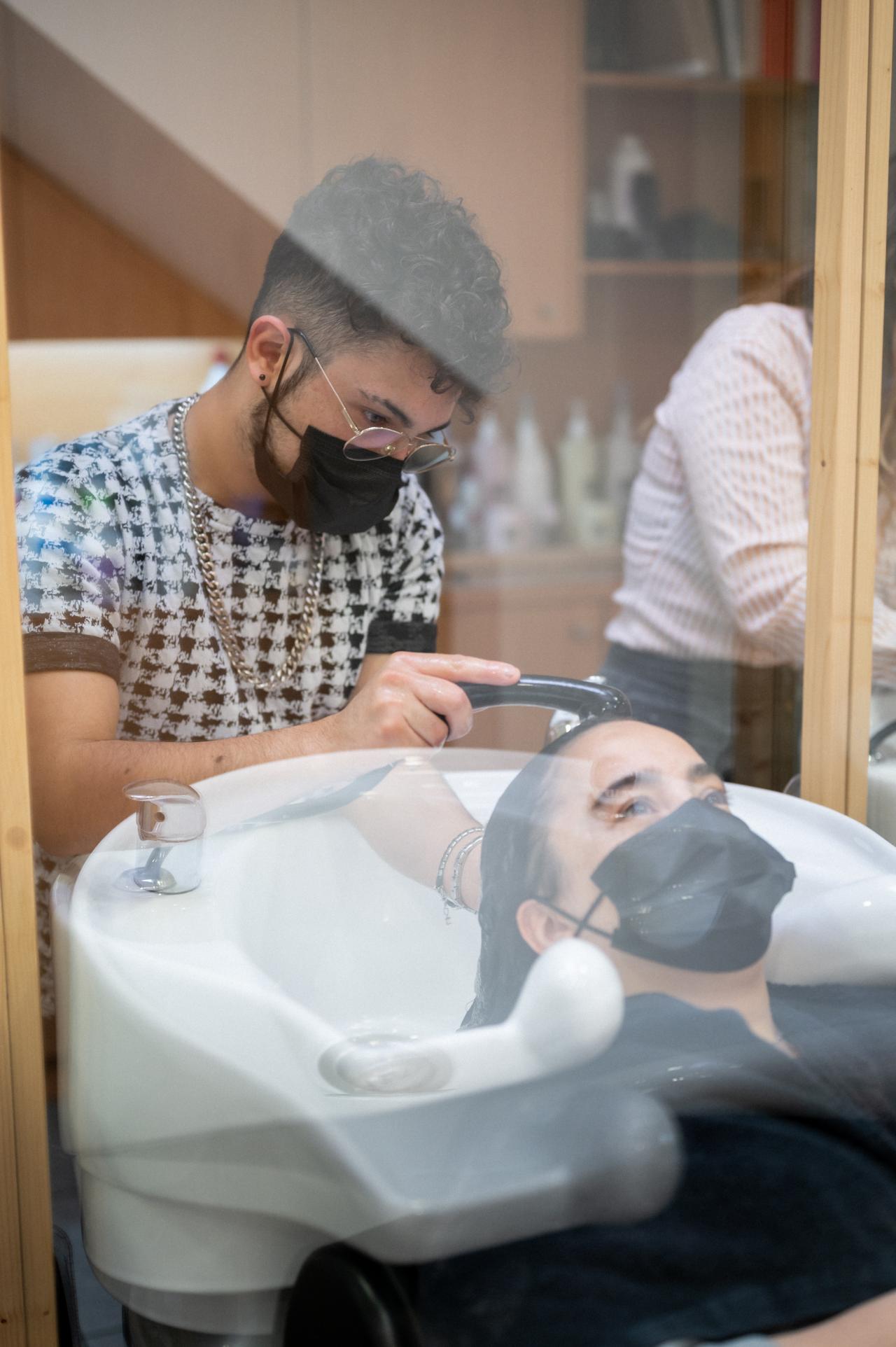
Having accumulated enough experience, I know that we will unfortunately never completely eradicate war, disease, poverty and social failure, but every day more than 15.000 people work, just for the members of Fedas Luxembourg, to at least alleviate the situation. Including the hospital sector and the world of education, I don't want to imagine or live in a society without all these people.
Hey, maybe we should go out and applaud on the balconies again in the evening!
To the would-be drop-out: I know that you can sometimes feel helpless, that you no longer enjoy what you're doing, that you let yourself go and become depressed. But, with the benefit of hindsight, I also know that everyone has a desire to learn and that it sometimes takes time to discover the subject you're passionate about. There's no shame in accepting help to rediscover that desire, or even in seeking an outside professional perspective that will ultimately encourage you to get back on track: "Push dech – push dech" (get moving), by giving a benevolent virtual kick to change your trajectory!