Listen to this article
The medium makes the message. With this in mind, this year we came up with 1 cm, a podcast dedicated to inclusion in the labour market, designed to make it accessible to as many people as possible. The aim: to lead by example rather than to point fingers. An ambitious challenge, but by no means impossible. Because impossible is not Lëtzebuerger Journal.
This article is available to you free of charge. If you want to support our team and quality journalism, subscribe now.
"I'd have been surprised if I hadn't seen you here."
That's what Max Hahn, Minister of Family Affairs, Solidarity, Living Together and Reception of Refugees, said to me when I arrived at the launch of his Ministry's Bewosst project, in collaboration with Info-Handicap and the Horeca, last September. It made me smile.
Then it made me think. It made me think because he had a point. The podcast I was there for, 1 cm, is already the second long-form podcast on the subject of inclusion (after D'Hoffnungsdréier) that the department I run at Lëtzebuerger Journal has produced in just two years.
I wondered: why is this subject so important to us? In truth, the answer is right in front of us. At our level, we want to get things moving. To represent. To give a voice to those who often lack one. And to do so in a different way. Close to the people. Close to the solution. Because telling others what to do is easy. Setting a good example is less so.
Less easy, but not impossible. And really, impossible is not Lëtzebuerger Journal. And the year 2025 has once again proved that. Once again, our team has proved that it never shies away from going the extra mile – or, to stay on topic, from the extra centimetre within its reach. So we asked ourselves the following question: How can we make a format that is not inherently fully inclusive, as inclusive as possible?
I've always wanted to invent. To conceptualise, structure, design sound, handle post-production… There's nothing quite like an Audition session that orchestrates different recordings made throughout the year. I've always wanted to innovate, too. To rethink media and their formats, even more so in podcasting. Someone once said: "The medium is the message". So making this 1 cm a good practice in its own right rather than a 'mere' messenger, was the perfect challenge.
A perfect challenge, and in my opinion, a successful one. Firstly, because of its participative nature. In addition to a call for interview partners via social networks, we invited someone directly affected to host our podcast. That's where Joanne Theisen, who lives with autism, comes in. With her honesty, good humour and, of course, her voice-over, she proved episode after episode – from the first recording to the spoonful of Nutella with which we celebrated our "wrap" – what the podcast continually emphasises: people with disabilities have talents we truly need.
"Someone once said: 'The medium is the message'. So making this 1 cm a good practice in its own right rather than a 'mere' messenger, was the perfect challenge."
But let's continue, because this podcast is innovative in lots of other ways, beyond the "nothing about us without us" principle. The sound design is calm and gentle. All episodes are available to read and listen in simplified language, in three languages, on our website. The cover combines an icon with Braille. Small details that make a big difference; they make this a podcast for everyone, without compromising the quality of its content.
Because inclusion matters. Everyone has the right to access information, so it's up to us as a media outlet to consider this when designing new formats. That's where I think our desire to change things makes the difference. Our collective desire to make a difference as a team, but also the individual commitment of each person involved.
I've encountered disability from an early age. My uncle lives with an mental handicap. If Christine Zimmer, director of Info-Handicap, is reading this, her fingers are probably itching to write to me and tell me that "people don't say mental handicap". I know that now, but I couldn't describe his exact diagnosis, because we never talked about it as a family. To us, it was ordinary. It wasn't a topic of conversation.
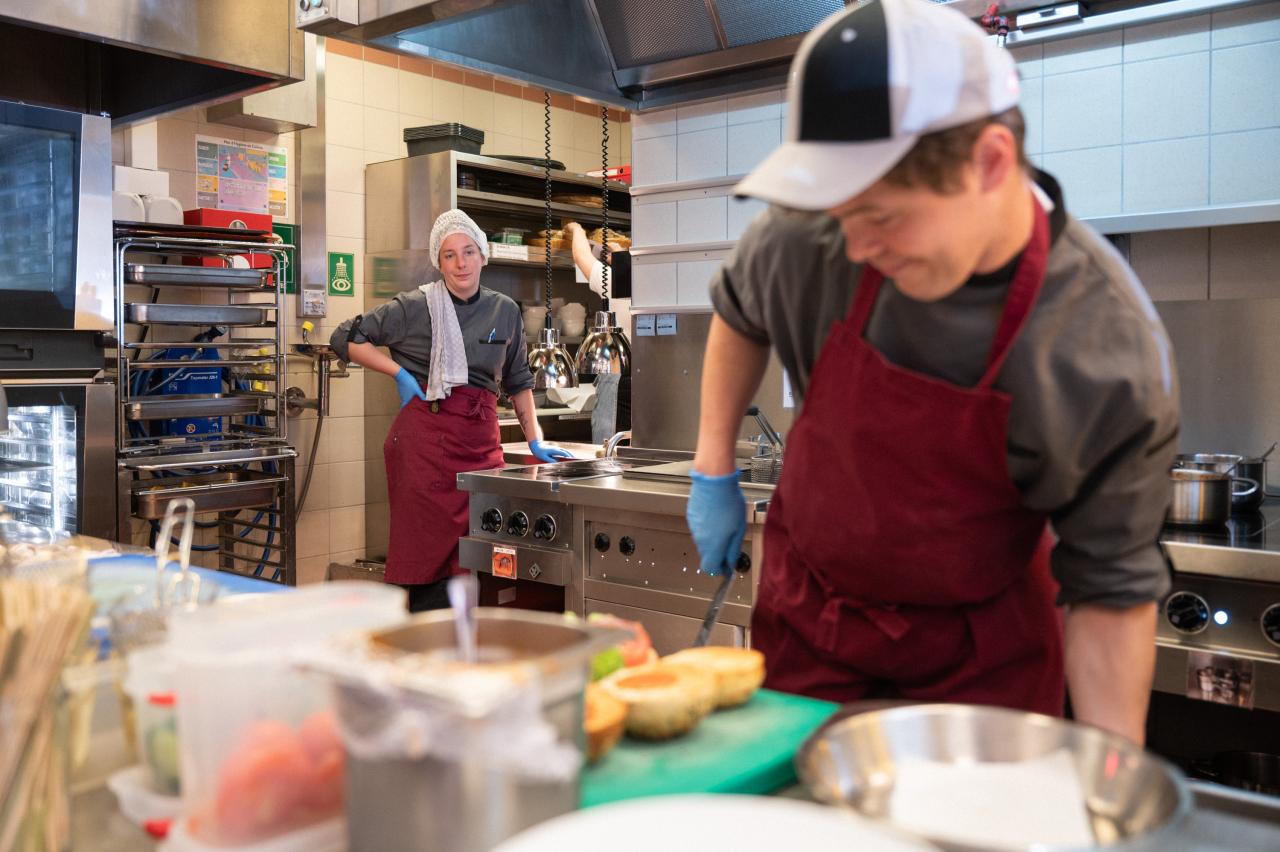
So it was Christine who made me pay attention to the lexicon we adopt or don't adopt. Because even in the media, you never stop learning. That's why our team took part in an Info-Handicap training session titled "How to communicate with a person with a disability?" in preparation for this podcast.
Today, we proudly wear a sunflower, the emblem of invisible disabilities, on our chests, in support of all those affected. In fact, invisible disability is the subject of the sixth and final episode of 1 cm, which celebrates the end of a year of tireless work by an entire team.
I could go on for three pages about it, there's so much to say. But one sentence will do. It sums up everything we wanted to do, what we achieved and what we're proud of today. That sentence is…
This podcast, quite simply, is our centimetre.