1 cm - Ep. 3: Sheltered workshops (in simple language)
By Maxime Toussaint, Melody Hansen, Christian Block, Misch Pautsch Switch to German for original article
"1 centimetre" is a podcast from the Lëtzebuerger Journal. The journalists have been working on this podcast for six months. The podcast is about people with disabilities at work. It is about their problems, opportunities and successes. This is the third episode of this podcast.
This article is written in simple language so that even more people can understand our work.
The topic is: Working in the sheltered workshops
This text is about sheltered workshops.
People with disabilities work there.
Two workshops are called APEMH and Ligue HMC.
We visit them.
And talk to the people who work there.
Other experts also have their say.
What is a sheltered workshop?
Many people with disabilities can't find work.
Some jobs are often too difficult for them.
For example, because of stress or pressure to perform.
That's why there are sheltered workshops.
These are sheltered workplaces.
This is also called: the second labour market.
There, care is taken to ensure that everyone is doing well.
Experts explain: The workshops are very important.
But the path to the normal labour market must be improved.
What is the APEMH?
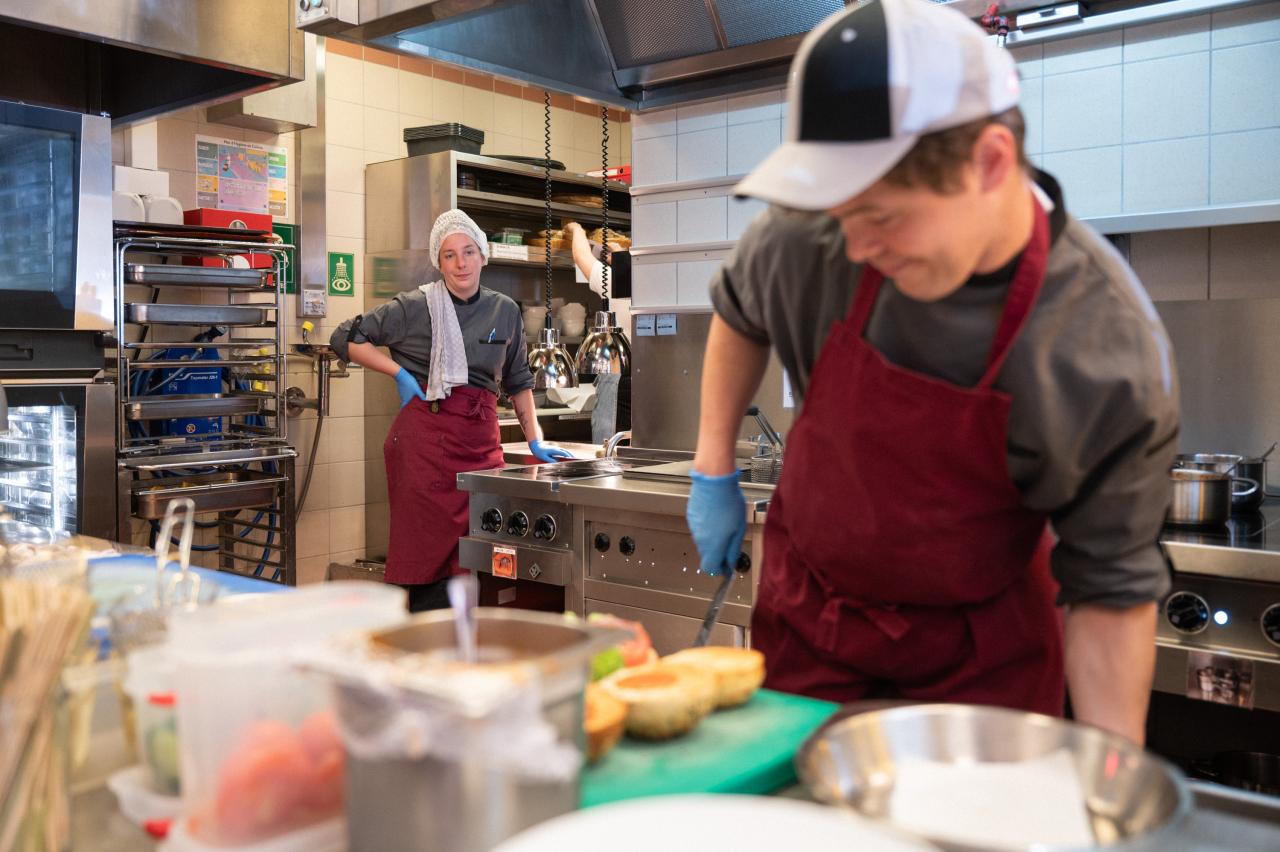
Laura Letsch is a food manager for two APEMH workshops.
She says:
We cook food here.
The food is for our canteen.
And the food is for a children's day centre.
The APEMH is our people's workplace.
The people here have a fixed labour contract.
They get a salary.
They work like employees.
David Mira: Cooking at the APEMH
David is 45 years old.
David was born with his disability.
He went to special schools.
David previously worked in other jobs. But it wasn't a good fit.
Cooking is his passion.
Now he is a chef at the APEMH.
The APEMH is an sheltered workshop.
He did an internship at APEMH.
He could choose the kitchen or the biscuit factory.
He chose the kitchen.
David says: "Today I feel like a normal employee."
David is happy at APEMH.
But before, people had prejudices:
He says: I got a label. The label is called: TH.
That's an abbreviation for: Travailleur handicapé.
That's French.
It means: worker with a disability.
David says: "I don't feel like a person with a disability."
People with disabilities are normal people.
They don't need a label.
Respect at work
David is happy at APEMH.
He wanted a boss who respects him.
David says:
My previous boss had no respect.
My boss at APEMH has respect.
A boss in a workshop has to stay calm.
Otherwise people get scared.
When people are afraid, they make mistakes.
It's important to get on well with your colleagues.
Why do people work in the sheltered workshop?
Many people want to enter the normal labour market.
But that's often difficult.
It often requires a lot of organisation.
Social contacts are an important aspect.
People are often alone on the normal labour market. Not here.
At APEMH, people are well looked after.
They have lots of social contacts.
Training at APEMH
Young people with disabilities can learn here.
They find out: What are my strengths?
They do work placements in the workshops.
The apprenticeship lasts 3 to 5 years.
Afterwards, they often get an employment contract with APEMH.

David Mira

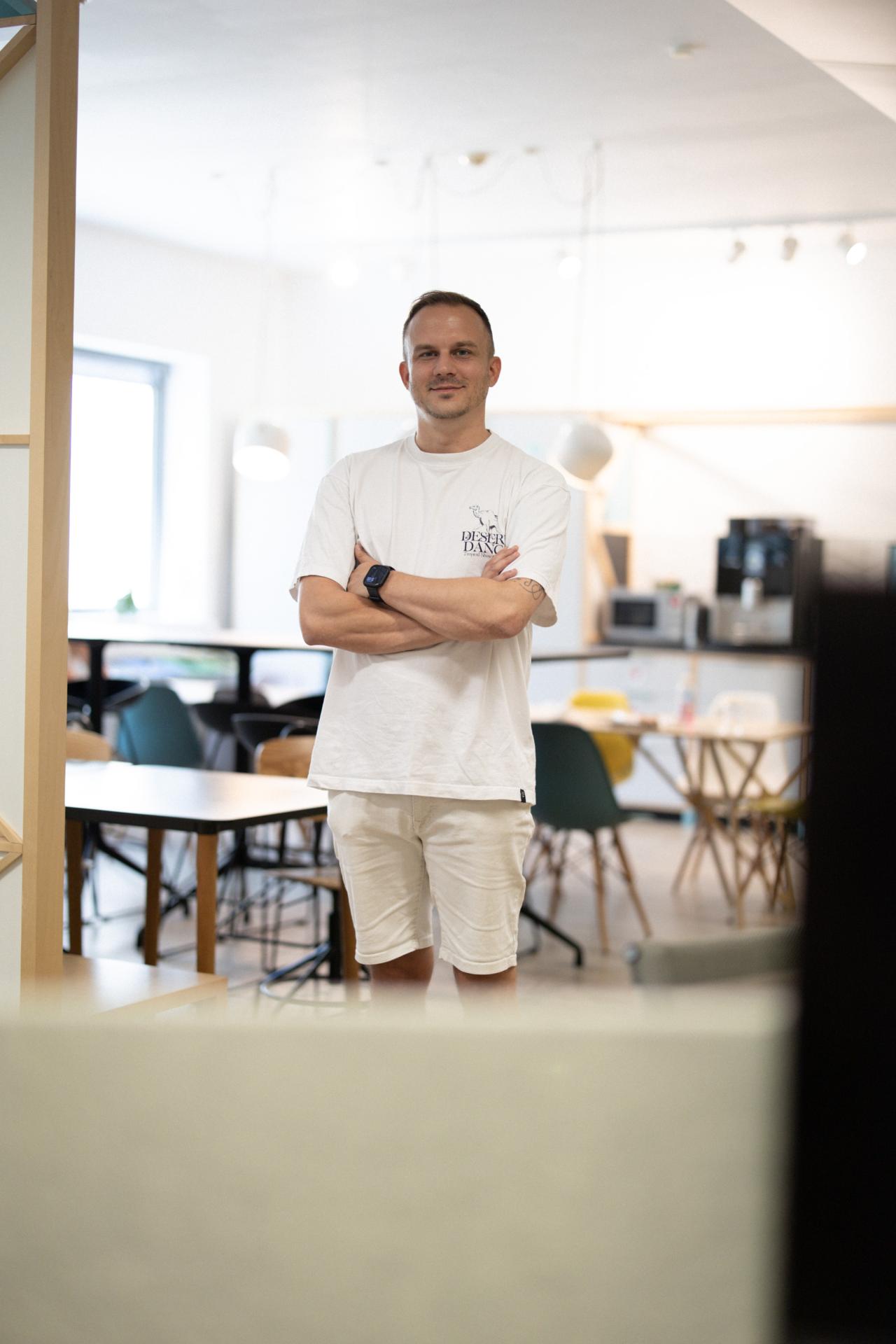
Laura Letsch
The Ligue HMC
The Ligue HMC is also an sheltered workshop.
"HMC" means: mental impairment.
Claudine Nosbusch is the director of the Ligue HMC.
"HMC" means: intellectual disability.
Intellectual impairment is not an illness.
Most people have it from birth.
People with intellectual disabilities are all different.
Many have difficulties with learning.
Or with understanding.
Or with language.
Or in social situations.
The Ligue HMC workshops
The Ligue HMC has many different workshops.
Some are:
– Carpentry (working with wood)
– Metal workshop (working with metal)
– Ceramics workshop (working with clay)
There are also service workshops:
– Gardening (working in the garden)
– Kitchen and canteen
– A restaurant. It is called Pomme Pomme.
– A shop for second-hand goods.
Bad experiences on the first labour market
One employee tells her story: "I used to get sacked all the time.
My boss got me down.
I had panic attacks when I thought about work.
Now I'm at Ligue HMC. I'm happy here.
I can work at my own pace."
Another employee tells us
A man tells us:
"I was at a government agency.
They didn't understand my problems.
I handed in my sick note too late.
They sacked me immediately."
Another employee says
Another woman tells me:
You can't see my impairment.
My impairment is in my brain.
That's why people don't treat me as if I have an impairment.
Instead, people treat me as if I'm stupid.
That's not good.
People should treat us with respect.
Paths between the worlds of work
There are 2 worlds of work:
1. The normal labour market. It's also called the primary labour market.
2. The sheltered workshops. It is also called the second labour market.
Experts say:
People must be able to switch between these two worlds.
If they want to.
The path from the workshop to the normal labour market must be improved.
Because it's always about people.
The Life Academy at Ligue HMC
At Ligue HMC, people can not only work.
They can also continue their education.
This happens in the Life Academy.
They learn skills here.
They do this in addition to their other work.
These skills help them in their day-to-day work.
One example is the newsletter workshop.
They make a newspaper there.
And they learn how to deal with the media.
They also do interviews with other people that work here.
But they also have other jobs:
One man usually works in the carpentry workshop.
He builds boxes and cabinets out of wood.
A woman usually works in the canteen.
She likes to bake waffles.

Der "Buttik" der Ligue HMC

Max Hahn
We talk to the Minister for Families and Inclusion
Max Hahn is the Minister for Families and Inclusion.
He thinks: Sheltered workshops are very good for many people.
But: Many people want to work in other places.
He wants to make the transition easier.
That's why we have the inclusion assistant.
An assistant is a helper.
This helper is intended to alleviate fears.
Bosses in the normal labour market are often afraid.
They don't know: How should I deal with this person?
The parents and the people themselves are also afraid.
The inclusion assistant should accompany and help everyone.
And you should always go back to the sheltered workshops.
If you like it better there.
How does the transition work today?
The Ligue HMC already does this with job coaches.
A job coach goes to the company and helps.
The person can always come back to the Ligue HMC.
At APEMH, the transition is rare.
In 4 years, 7 people have gone onto the normal labour market.
That's not many.
Why is that?
Most employees don't want to change.
They feel at home at APEMH.
They have good support and social contacts here.
Sheltered workshops are real workplaces
Info Handicap is a counselling centre.
Info Handicap says:
The workshops are not occupational therapy.
The workshops are real workplaces.
People with real talent work there.
They make high-quality products.
For example: chocolate, furniture or food in restaurants.
The workshops also work together with other companies.
What needs to be improved?
David says:
People with TH status need more support.
They need more financial support.
They often only get the minimum wage.
That is not enough to pay for a flat.
So there are still problems:
– The wage is not high.
– The training does not have an official certificate.
An important place
Nevertheless, the workshops are very important.
People find good work there.
They find work that they can't get on the labour market.
The next episode is about good examples.
It's about employers who are already doing inclusion well.
Would you like to learn more about our work and support us? Here you can find out more about our approach: