1 cm - Ep. 5: What politicians still have to do (in simple language)
By Maxime Toussaint, Lex Kleren, Misch Pautsch, Sherley De Deurwaerder, Christian Block Switch to German for original article
"1 centimetre" is a podcast from the Lëtzebuerger Journal. The journalists have been working on this podcast for six months. The podcast is about people with disabilities at work. It is about their problems, opportunities and successes. This is the fifth episode of this podcast.
Many people with disabilities have no work.
In Luxembourg, many people with disabilities do not have a job.
But many people with disabilities have good skills.
Many bosses do not recognise these skills.
Often the bosses have no experience with people with disabilities.
They are afraid or simply don't know enough.
They don't exclude people on purpose.
But in the end it happens anyway.
Politicians are making a new plan.
That's why the government is currently working on a new plan.
The plan is called the "Action Plan for Inclusion".
It sets out what needs to improve in the future.
For example, it is about how more people with disabilities can find work.
What are quotas?
There is a rule in Luxembourg.
This rule is called a quota.
It says:
Certain companies must hire people with disabilities.
The rule says
– Public organisations must give 5 out of 100 jobs to people with disabilities.
– Private companies with at least 25 employees must employ 1 person with a disability.
– From 50 employees, it must be 2 out of 100.
– And from 300 employees, it is 4 out of 100.
A good example: Sam Houblie at Hornbach
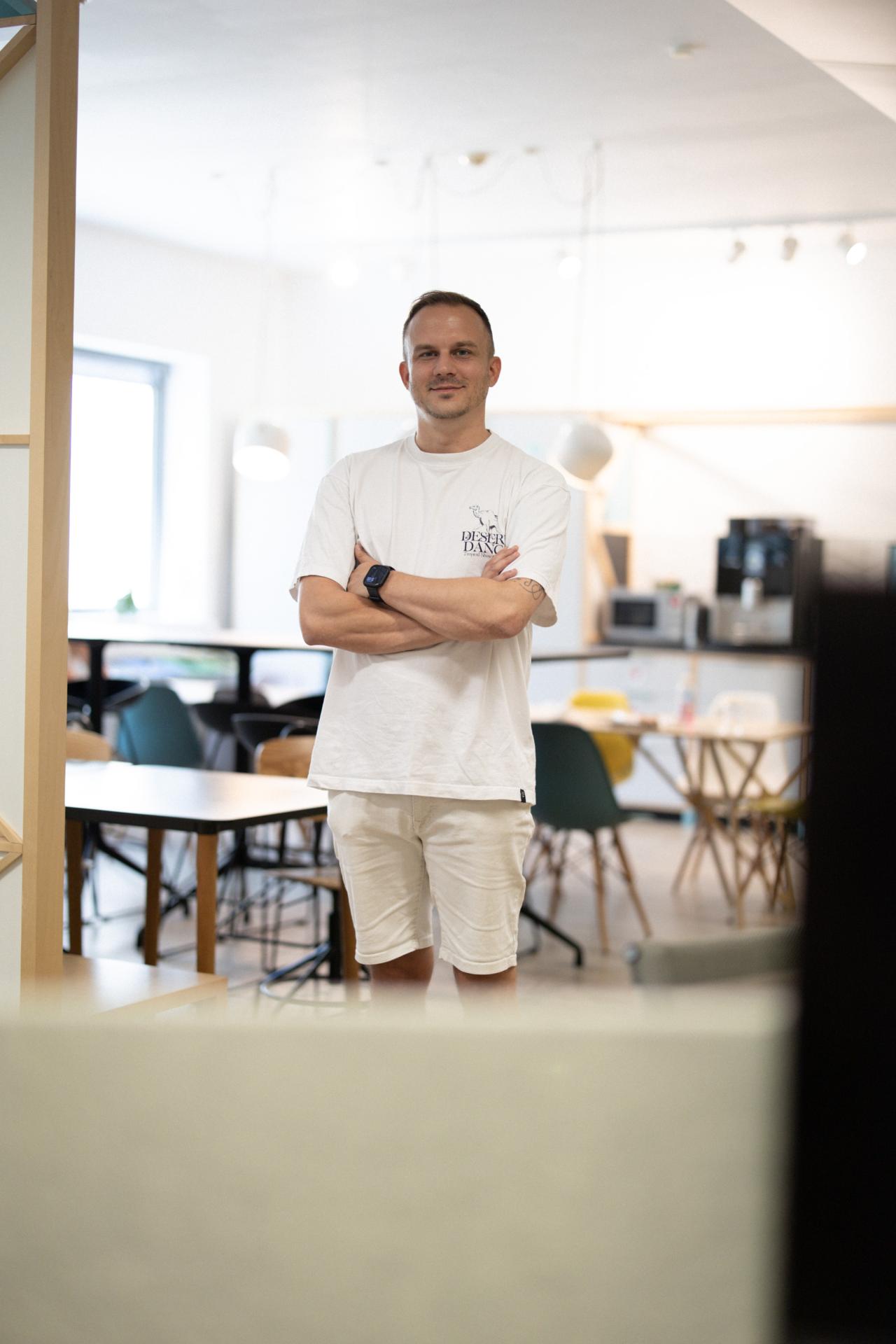
Sam Houblie is Head of Human Resources at Hornbach.
He has autism.
Sam says: "For him, this is not a weakness, but a strength.
He thinks differently and has lots of ideas.
Since he became head of HR, more people with disabilities have been working at Hornbach.
There are now 8 out of 100.
That's twice as many as the quota says.
Most companies don't manage to do that.
What does Sam do differently?
Sam looks closely at what work is available in the company.
And which skills are important for it.
Then he looks at which person is a good fit for which job.
He says: "It's not just about limitations.
People with disabilities often also have special strengths.
For example:
Blind people often have particularly good hearing.
People with autism are often good with numbers or computers.
Many bosses are afraid
Christine Zimmer from Info Handicap says:
Many bosses don't know how to deal with people with impairments.
That's why they are afraid or insecure.
Info Handicap helps to reduce this fear.
It provides training and information for bosses and companies.
Motivation is very important
Sam says:
The most important thing is that a person is motivated.
Only then can you really make a difference.
He himself has also done social work in the past.
Even before he knew he had autism.

Sam Houblie

Georges Mischo, Arbeitsminister und Sportminister
What does politics do?
Max Hahn is the Minister for Family Affairs.
He says: "Many ministries have to work together.
For example: labour, schools, health or housing.
They have to think together about what can be done better.
Georges Mischo is the Minister of Labour.
He says:
The new plan should be ready in autumn 2026.
The laws are also to be adapted.
For example: it should not be so complicated to obtain "salarié handicapé" status.
The aim is:
More people with disabilities should get a good job.
Why don't many companies adhere to the quotas?
There is a quota rule in Luxembourg.
But: If a company does not fulfil the quota, nothing happens.
In other countries there is a penalty.
But not in Luxembourg.
Many people say nothing about their impairment
Many people with disabilities do not tell their boss that they are affected.
They are afraid of being penalised.
Or they are ashamed.
The impairment is often not obvious at first glance.
What is an inclusion assistant?
An inclusion assistant is a person who helps.
They help people with disabilities and their bosses at work.
They ensure that the working conditions are well adapted.
At the moment, however, the assistant often only arrives when there is already a problem.
That should change.
The assistant should help at an earlier stage.
At the job interview, for example.
Sam says: Inclusion brings many advantages
People with disabilities are often very grateful to be able to work.
They are less likely to be absent from work.
The atmosphere in the team improves.
The state pays for the time when someone works more slowly.
So there are no disadvantages for the company – only advantages
What else does Sam want to achieve in the future?
Sam wants to employ even more people with disabilities.
Including people in training.
There will soon be clear rules for this.
At the moment, these rules do not yet exist for trainees with disabilities.
Sam says: "Everyone should get a chance.
Even during training and when starting a new job.
Conclusion:
Inclusion is possible.
It needs motivated people like Sam.
Politicians need to make good rules.
Companies need more information and support.
Next episode:
The next episode is about invisible impairments.
Many people's impairments are not visible.
But they need support too.


Would you like to learn more about our work and support us? Here you can find out more about our approach: