Listen to this article
When I look back to 2025, I see the year in which the ominous "AI" has become a social threat. "Reality" on the internet is now the exception. This makes it all the more liberating to return to the analogue, the real thing.
This article is provided to you free of charge. If you want to support our team, take out a subscription now.
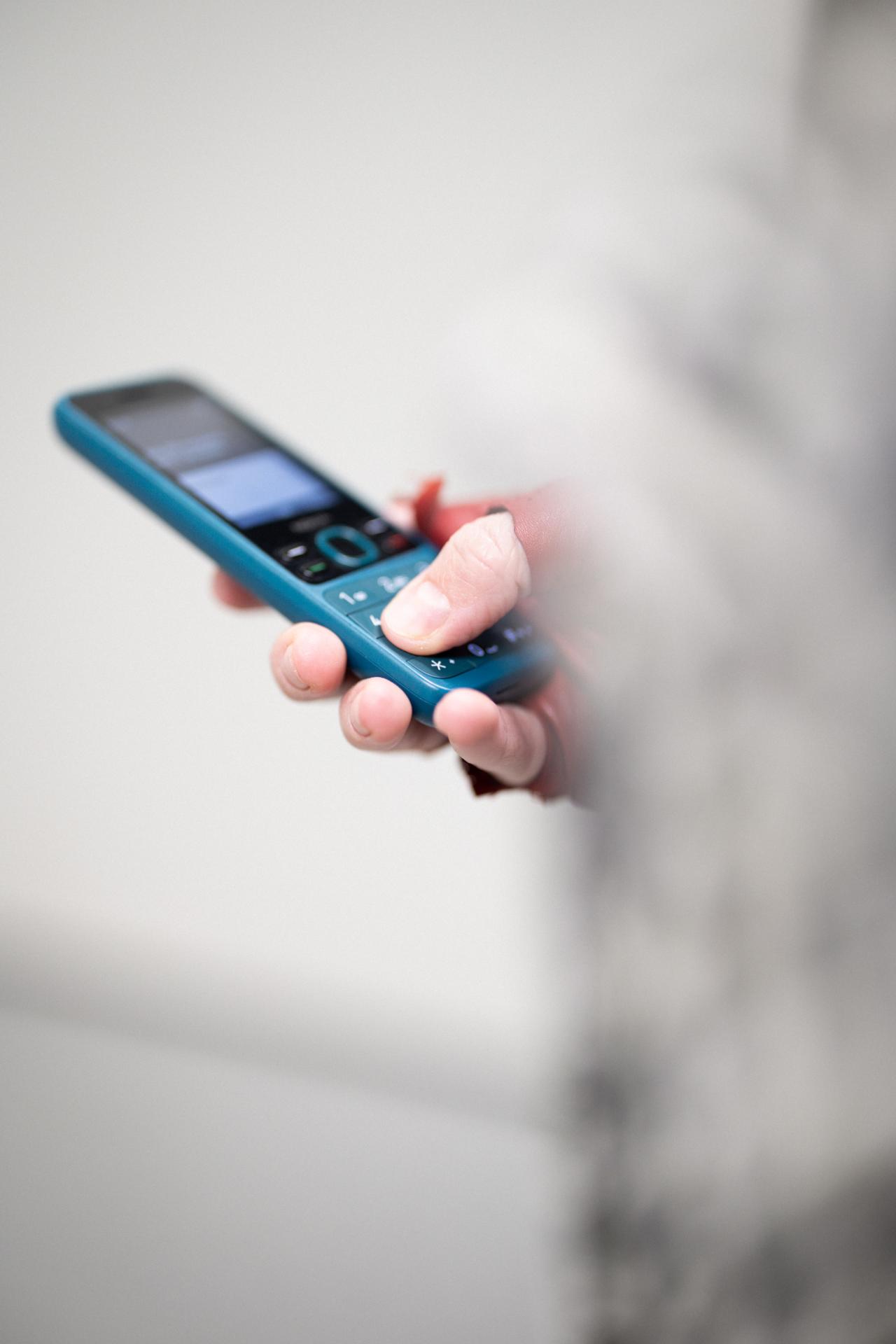
Pol pushes his scratched mobile phone across the table. It can make calls, send text messages and has a 1.3 megapixel camera. He has had this one yellow Nokia in his pocket for over ten years – longer than most of us have owned three, four, five … six … smartphones. Pol is no technophobic hermit, but he values his time offline. Social media and emails wait until he's on the computer.
When I was growing up, the internet existed in a certain place and at a certain time: on the family computer in the centre of the living room, while nobody needed the phone. Today, what stand out most are the moments when the line goes dead. Pauses in the omnipresence.
The normal state of Web 3.0, dominated by the social media titans, is a colourful, sweet-and-sour fever dream in which one moment you see a cute cat video and the next a starving child. A perfectly calibrated time-eating machine with the sole aim of hijacking our attention.

From this year onwards, it will no longer be possible to tell with the human eye how many of the images and videos in the feed are real. Anyone who still believes they can recognise AI photos and videos is living in a dangerous illusion. The future of social platforms is synthetic content that only exists to push our emotional buttons. Joy, disgust, sadness, anger, pity, hate – if they used to be reactions to experiences, today they are prompts to create the experience in the image generator.
I curse. In a pitch-black room, my fingers search for the beginning of the film reel. The last few centimetres just won't fit into the fixture – I cut them off. I have no idea how many photos that cost… Twenty minutes later, a slightly acrid odour of processing chemicals fills the kitchen. I slowly pull the film out of the roll and hold it up to the light. For the first time in my life, I see negatives that I have made myself. They're not masterpieces, but every moment of them happened. Really. 32 out of a possible 36 photos, not bad. I think of Pol and his mobile phone.

The counter-culture movement back to analogue is nothing new. Vinyl records, overpriced retro film cameras and dumb phones are so hip that they are almost out of fashion again. Some types of photographic film have become objects of speculation. Paper books still overshadow e-books. A big part of the movement is the desire to own physical things instead of just renting digital copies. But what is becoming increasingly important is the weariness of digital oversaturation, a return to the "real" life "out there", real contacts or, as Pol says: "I think we have become less social as a society because of mobile phones, because it interferes with interpersonal interactions."
Social media platforms – and with them the entire internet – like to present themselves as places to share one's own life with others. However, this illusion was shattered recently when Meta publicly toyed with the idea of filling its feeds with AI characters because users were uploading fewer and fewer photos of their own lives. Even if these plans (according to their own statements) were not realised after all, this does not stop other players from sharing their own bots and AI content. Do people want to be on a platform where you have to ask yourself the question with every picture, video and comment? Did this really happen? Did a human write, make, see and film this?
It will be interesting to see whether this longing for the real thing will continue to spread with the increasing anti-reality of the online world, or whether the emotional shells will be enough to allow Web 3.0 to continue to exist. Until then, we can perhaps learn something from the smartphone rebels who, despite many small challenges, live a little more analogue lives than the rest of us. Finding our way back into a world where only 32 out of 36 photos become something, but they certainly really happened. I'm not a technophobic hermit, but I value my time offline.