1 cm in ETR - Episode 4: Looking for good examples
By Lëtzebuerger Journal Switch to German for original article
Listen to this article
This podcast is called 1cm. That means: one centimetre. Sometimes a small difference changes a lot. For example an honest talk.
Last time, we talked about inclusion in ateliers.
Today we look at good examples on the job market.
We meet Jessica and Tamara.
Jessica
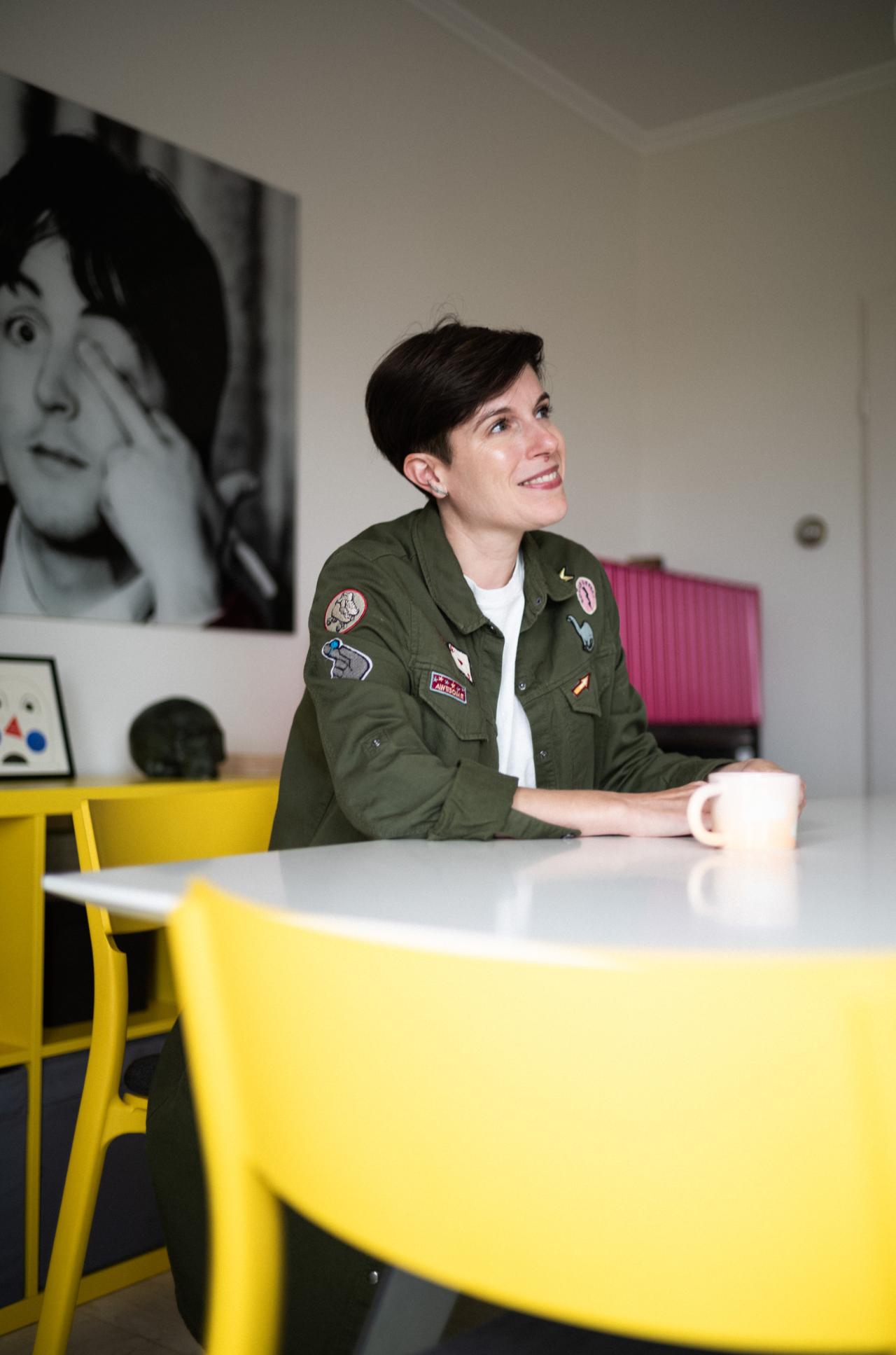
Jessica is 32 years old.
She works as a care assistant.
Care assistant means: a person who helps sick people.
4 years ago, she became sick.
Jessica tells us about her sickness.
Jessica says: she had bone cancer.
She had an operation.
But the cancer came back.
2 and a half years ago, the doctor removed her leg.
Jessica says, how she felt after the operation.
Jessica says: at first it was a shock.
Then she thinks:
I have a small child at home.
I have to make the best of it.
And fight.
Tamara
Tamara is 27 years old.
She works in a public service.
For example: a town.
At the age of 11, she had a riding (horse) accident.
Tamara tells us what happened next.
Tamara says: after the riding accident, she had a lot of pain.
Nobody could say why.
Years later she got the result: a tumour in the pelvis.
Pelvis means: a bone.
Tamara had a long medical treatment.
Chemotherapy, radiation and many operations.
The tumour was very big at that time.
After that, she knew:
she will live with disabilities forever.

Job wishes that had to change
Tamara had different job wishes as a kid.
She tells us what wishes she had.
Tamara says: she wanted to work with horses.
That was no longer possible.
She also wanted to become a police officer.
That was no longer possible either.
It was clear to her: it has to be an office job.
Jessica's concerns about her future
Jessica also did not know if she can keep working as a care assistant.
She did a lot of medical tests.
That took a long time.
Jessica tells us about her hard time.
Jessica says: it took a long time to even get an appointment.
Then the doctors forgot her results from the medical tests.
She did everything again.
That made her very angry.
Good example of a work place
Andrea Di Ronco works at Info Handicap.
He explains how some work places do it well.
Andrea says:
Some large work places already have solutions.
They know how to adapt the work.
Its not about time and energy.
It is only a question of organisation.
Jessica goes back to work
Jessica was able to stay with her boss.
But she had to move to another workplace.
Jessica explains why that is best for her.
Jessica says: she wanted to go back to her old workplace.
But the new workplace is more adapt for her.
The new workplace is not far away and there are less floors.

Jessica
Jessica's boss
Jessica's workplace is called Servior.
It is a public care home.
Servior has a lot of care homes in the country of Luxembourg.
Steve Infalt is the boss of the care home in Diekirch.
Steve says why Servior helped Jessica.
Steve says:
There is not a lot of people working in care homes.
But that was not the reason Jessica came back.
Jessica worked good before.
She was very much loved by a lot of people.
Jessica deserves a lot of respect.
But Steve had a lot of questions at the beginning.
Steve says:
They were not sure if Jessica can do the physical work.
Because a care job is hard work.
Jessica says how she works today.
Jessica says: she does almost everything like before.
For some people, she uses a hoist.
A hoist is a lift to help people.
She does not lift people directly.
Because she is scared they both fall together.
Talking to people is important
Christine Zimmer from Info Handicap explains what is important.
Christine says: talking to each other helps.
Working together makes it easier.
Finding solutions together.
Every boss should have an idea.
You don't have to change everything at once.
You can go step by step.
"Talking to each other helps."
Christine Zimmer, Info Handicap
Tamara's way back to work
Tamara talked about her disability already at the job interview.
Job interviews means: a meeting to get a job.
Tamara explains how that was.
Tamara says: she talked about it directly at the job interview.
That was not a problem from the start.
She received a chair that is good for her back.
And a special desk (table).
Tamara can change the height of the desk.
Fred Ternes is mayor of the town of Niederanven.
A mayor leads the town.
He remembers Tamara's job interview.
Fred says: the disability was not a reason to keep Tamara out.
They asked what Tamara needs.
For example an elevator.
They never treated Tamara differently from other employees.
Tamara's hard experience at the ADEM
Tamara also had hard experiences.
ADEM is the employment agency of The country of Luxembourg.
Tamara had to do more tests at the ADEM.
Tamara tells us about her experience.
Tamara says: she always wanted to go to the first job market.
The first job market means: jobs outside of the ateliers.
For example: a company.
Her disability is physical, not a learning disability.
But she still had to do tests at the ADEM.
These tests were meant to show if she has a learning disability.
But that is already written in her file.
Tamara also tells us about a meeting that hurt her.
Tamara tells us:
a person from the ADEM said Tamara did something wrong.
Because she had not yet looked for work herself.
Tamara left the room.
She had no more strength.
She wrote an e-mail to the ADEM.
Until today no answer.

Fred Ternes und Tamara Schuster
Today
Today Jessica no longer works the whole day, only 75 per cent.
She earns exactly the same as before with 100 per cent.
Thanks to the points system in her contract.
That means: she automatically earns more after a few years.
Tamara works 30 hours per week.
She organises the appointments of the bosses of the town.
Jessica tells us how her team treats her.
Jessica says: some co-workers do not want her to do too much.
Jessica then says: I can also do that alone.
She understands this and it is not a problem.
What will happen in the future
Maybe Jessica can no longer do her work one day.
Steve Infalt explains what will happen then.
Steve says: they could change the work.
For example: Jessica could take more care of people.
Instead of doing the physical work.
Fred Ternes says: that should actually be normal.
Fred says: that should be normal today.
But you still hear too many bad stories.
As a town, he wants to be a good example.
"You have to ask for help when it is no longer possible to do it by yourself."
Tamara
Rules and buildings
In country of Luxembourg, there is a rule.
Companies must employ a number of persons with the status.
The town of Niederanven respects this rule.
Fred Ternes also explains what still needs to be done for the buildings.
Fred says: there is a new rule.
Public buildings must be accessible for persons who have difficulties getting in.
For persons who see badly, hear badly or walk badly.
The town has more than 45 buildings.
That will be a lot of work.
What Jessica and Tamara want to say to others
Jessica talks about her past.
Jessica says: she remembered something her doctor said.
He said: wait one year, then we see what happens.
She stayed strong and did not give up.
It can take a long time.
But you can arrive where you want to go.
Tamara also gives a tip.
Tamara says: it is good to have persons who help.
You have to let your feelings exist.
Not push your feelings away.
Talk to people.
Ask for help when it is no longer possible to do it by yourself.
What have we learned?
There are already good examples in the country of Luxembourg.
But more are still needed.
Talking is important.
And sometimes it is enough to simply ask: what do you need?
Sometimes it is just a small step that makes the difference.
Sometimes it is just one centimetre.
Next part
In the next part, we talk about rules.
Can rules help to create more good examples?
Subscribe to the podcast so you don't miss any part.

Das Isie-Team
The Team from Isie
-
Around 30 people helped out.
They read the texts.
And checked: is this really easy to understand?
The team comes from the atelier isie.
Isie is an atelier of the APEMH.
The people there are experts in Easy Language.
They have learning difficulties.
That is why they know best:
What is easy to understand?
What is not?
In the photo you can see part of the team.
They come from Limpach.
In total, people from 4 locations took part:
Limpach, Betten, Housen and Nossbierg.
Thank you all!

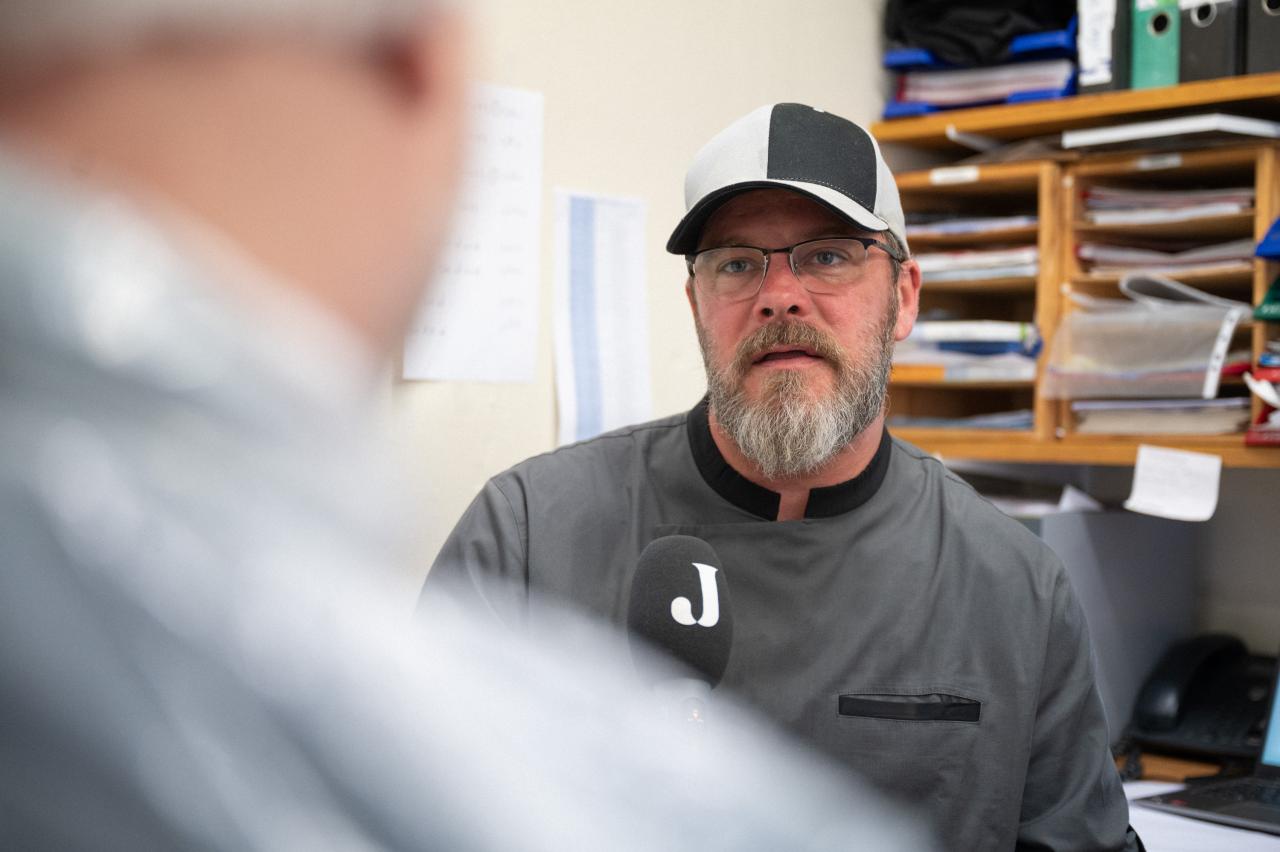
Jessica und Journalist Christian