Wat mengs du? - A social worker's chronicle of the housing emergency
Switch to French for original article
Listen to this article
According to the World Health Organisation, adequate housing is an essential condition for a healthy life. But what remains of this principle when access to housing becomes uncertain or even inaccessible? For a growing number of people, living in Luxembourg today means above all: holding on, adapting, surviving. This is what social worker Annick Neven expresses in this carte blanche.
In Luxembourg, the housing crisis is well-established. It now cuts across all strata of society. The media are increasingly reporting the stories of people in housing distress, denouncing excessively high rents and calling for the creation of affordable housing. Political responses include financial aid, mobilisation of vacant housing and accelerated construction.
But behind these widely shared observations, a more muted reality persists: the day-to-day lives of people faced with the termination of tenancies. As a social worker, every day I witness the beginning of a distress that is both invisible and exhausting: one notice of termination of the tenancy agreement, and everything changes. The three or six months' notice required by law may seem reasonable at first glance. In reality, it marks the start of a race against time.
Finding somewhere to live in Luxembourg is no longer a simple process, it's an ordeal. The competition is immense, the criteria ever stricter. A permanent contract is no longer enough. Estate agents demand an income equivalent to three times the rent and an "ideal" family situation. Single-parent families, low-income households, families with children or pets are often rejected out of hand. Every child should have his or her own bedroom, a requirement that keeps some of the "working poor" out of the rental market. It doesn't matter that two-income couples can split up overnight, or that high incomes are no guarantee of better financial management: only solvency counts. So begins a desperate search: looking at advertisements, sending in applications, waiting for a reply. Then start again. Over and over again.
"As a social worker, every day I witness the beginning of a distress that is both invisible and exhausting: one notice of termination of the tenancy agreement, and everything changes."
Annick Neven




I see people arriving with hope. Then, as the weeks go by, said hope crumbles. Each rejection weighs heavily. In the background, the psychological pressure and anxieties take over: what will happen if I don't find accommodation in time? The search in the community where I currently live doesn't seem to be going very well – how will the children react to the change of school, the abandonment of their extra-curricular activities, their friends, their equilibrium? Can the new childcare facilities guarantee available places? Is the new home well served by public transport? Will it allow me to keep to my working hours? What should I do if the landlord continues to contact me to ask about the inventory of fixtures when I leave? Am I obliged to take legal action? What should I do if I have to pay for legal fees and moving expenses that I can't afford? Leaving a home in dignity, without conflict or proceedings before the justice of the peace, should be the norm. Today, this is becoming the exception.
These issues are compounded by an overwhelming mental burden. The lack of sleep, the constant stress, the fear of failure, the shame. The feeling of losing control, of seeing your situation deteriorate despite all your efforts.
Faced with these situations, we do what we can. We listen, we support, we confirm the distress. But let's be clear: there are no solutions. Waiting lists for social housing stretch on for years. So-called "emergency" accommodation is saturated. So I often find myself saying the same thing: keep looking, don't give up. I say this knowing how empty these words sound.
My advice is to prepare more complete and personal files: payslips, contracts, savings account statements, diplomas/training certificates, enrolment in extracurricular activities, proof of regular rent payments. Everything becomes an argument for standing out in a market where you have to stand out from the countless other candidates.
Annick Neven
-
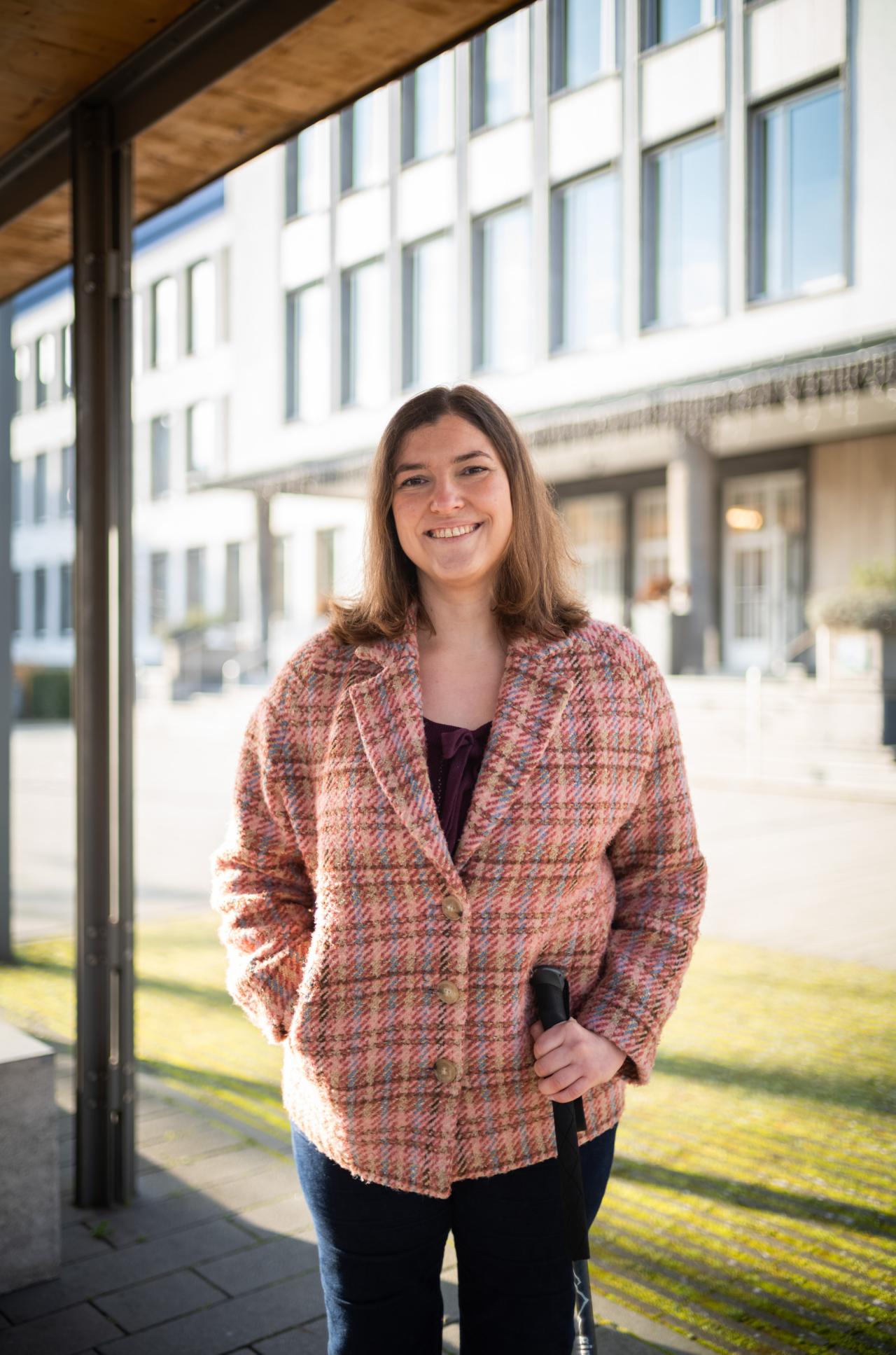
A social worker in Luxembourg who trained in Brussels, Annick Neven has worked for ten years supporting people in precarious situations. Her role involves supporting individuals and families in the face of complex social difficulties, particularly those relating to housing.
Through this carte blanche, she hopes to give a voice to these often invisible realities, and give an account of the day-to-day limitations that she and her colleagues face.
But this pressure also leads people to accept the unacceptable. I see people prepared to rent substandard accommodation, to pay excessive rents, not to challenge the clause linking rent increases to the consumer price index beforehand, to accept illegal conditions: excessively high deposits/agency fees, rent in advance, insecure contracts. All this to avoid one thing: finding yourself without a roof over your head.
Losing your home is more than just losing a place to live. It means being thrown into a process of exclusion: deteriorating health, the risk of losing one's job, the loss of one's bearings and, where necessary, the placement of one's children. Without an official address, access to rights becomes an obstacle course, and you are erased. Housing is a foundation, an existential stability. Without it, everything falters.
All too often, people come to the social services with hope, only to leave without a solution, frustrated and feeling abandoned. And by doing so, we jeopardise their trust – in social work, in the social system as a whole and in the policies that shape it.
And while strategies are being drawn up for 2030 – particularly since Luxembourg signed a commitment in Lisbon on 21 June 2021 to ensure that, by 2030, no one will be sleeping rough for lack of accessible, safe and appropriate emergency accommodation, and that this commitment should also benefit those who are vainly looking for accommodation – I continue to see these people every day, with the same urgent question in mind: what do we say to them today, when they no longer have time to wait?