Wat mengs du ? - Tax reform : No recognition, but full responsibility for families
Switch to German for original article
Listen to this article
With its tax reform, the government is promising greater tax fairness among citizens. However, if taxes are calculated as if everyone were living alone, yet the state expects couples to pay for one another, this is inconsistent. Aline Schaltz wrote this in a petition, and now in this Carte Blanche.
When people are confronted with strokes of fate – such as illness or death – the question often arises: What makes a life worth living? Research clearly shows that what helps people to live healthy and happy lives are reliable relationships – people you can count on. This thought also crossed my mind when I was diagnosed with cancer two years ago. I was lucky: the treatment was less invasive and the prognosis was very good. But the experience has permanently sharpened my focus: of course you need functioning institutions – but in difficult phases, the most important thing is a reliable partner: family, partnership, a network that catches you before the state has to intervene.
Perhaps this experience is the reason why the planned tax reform bothers me so much and feels wrong. It weakens the very safety net that supported me two years ago by taking away the financial recognition of partnership and family. If relationships make people healthy and happy, and if commitment sustains them in an emergency, shouldn't politics strengthen them and make them safer for everyone – instead of eroding them fiscally and weakening them financially?
I ask myself: What is the core objective of this reform? It ignores differences in living standards, creates more bureaucracy and causes a real loss of purchasing power by not indexing until 2028 – especially for people who are already in tax bracket 1a today and for couples who remain in bracket 2. In addition, households with high incomes will benefit the most: Deductions and allowances can only be utilised if you can afford them – and they have the greatest impact when tax rates are high. The high budget is intended to make the system change – away from the recognition of solidary partnership and towards complete individualisation – more acceptable. The main beneficiaries should be people who organise their lives individually: Single people and couples with strictly separate finances. All of this should be openly named and thoroughly discussed.
"The state taxes as if everyone lived alone and then decides who gets something back, when and under what conditions via allowances, deductions or aid. This is not a withdrawal from private life, but more state control."
Beyond all these – by no means unimportant – questions, the decisive one for me remains: does everyone really realise the effect of this reform – and can it really be wanted in this consequence? Is it about deliberately devaluing couples who share responsibility? Or is this devaluation being accepted in order to increase the pressure for permanent full-time employment – and to "outsource" childcare, care, voluntary work and solidarity to a greater extent, i.e. to shift them to paid or state-organised structures?
To understand the consequences of this reform, you need to understand what our system does today. Tax class 2 follows the logic of the civil code and social policy: partnership as a unit of responsibility and economic unity. In an emergency, legal partners must provide for each other financially. Social benefits are usually calculated according to the household. With two similarly high incomes, tax class 2 is practically the same as tax class 1. It is particularly noticeable in phases of life in which income is temporarily lost (illness, unemployment) or reduced (further education, childcare, care, voluntary work) – in other words, when couples have to share responsibility.
The reform breaks with this logic: Legal partnerships must continue to provide for each other – but have fewer financial resources at their disposal due to individualised taxation, especially in difficult phases. If the partnership is no longer recognised as a unit for tax purposes, the self-chosen "we" is less able to cushion the risks that life brings. The state taxes as if everyone lived alone and then decides who gets something back, when and under what conditions by means of allowances, deductions or assistance. This is not a withdrawal from private life, but more state control – and less room for manoeuvre for families.
Aline Schaltz
-
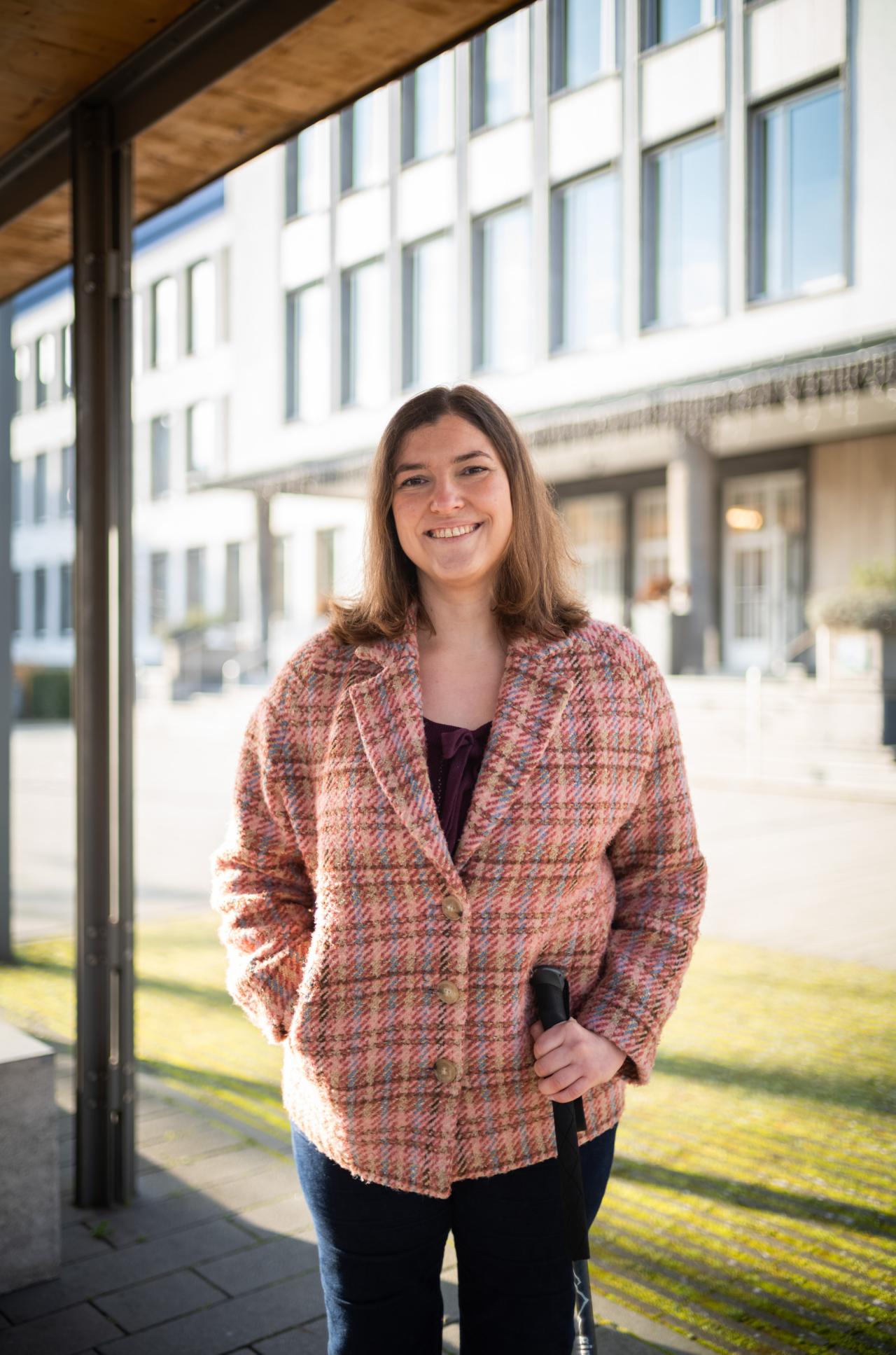
Aline Schaltz is 37 years old and lives with her husband and two children in Walferdange, where she is active in local politics and a member of the local council (déi gréng). She has a Master's degree in Sustainable Development and is currently working independently on projects in the field of communal living. She has also set up a Facebook page dedicated to family interests: https://www.facebook.com/FamiliesLuxembourg.
This is how she describes what moves her: "My parents are my boat: they carried me into life, shaped me and showed me how to navigate safely through turbulent times. My sisters are my compass: they know me, give me orientation and show me the way when things become unclear. My husband is my anchor and my harbour: I find stability, trust and peace with him. My children are my sails: they give me strength, joie de vivre and a constant updraft. My family is my safety net on the sea of life. I wish for every person to have such a net – and that is precisely why I am committed to ensuring that families are visible, respected and recognised in all their diversity."
And even if you accept the loss of family freedom and greater state intervention – or even want it – you would have to think the logic of "equal treatment" through to its logical conclusion. Then we would also have to completely individualise the social system and redefine the financial obligations within marriage and pacs. That would be consistent – and at the same time such a logic would weaken our society, because it tailors everything to the individual and shifts responsibility between people into rules and procedures. But isn't it precisely the material and legal security – the sharing of risks and responsibilities – that makes a partnership what it is?
The reform amounts to reducing relationships to a private feeling and devaluing them structurally. I think that's a mistake. Commitment is a basic need, and reliable relationships are crucial for health and satisfaction. If we recognise this reality, politics should not "erase" relationships fiscally, but rather make them more secure for everyone involved: with equalisation mechanisms (e.g. pension splitting), clear rules and fair protection solutions when relationships end. Security must not mean isolation.
In difficult phases, it is not the illusion of complete independence that helps, but a reliable counterpart. This is exactly what reforms should be about: improving structures – instead of cutting private safety ropes and hoping that the state safety net will catch everything. Because no state system is as approachable, as strong and as human as the network that people weave for each other in a close circle.
Wat mengs du ?
-
Once a month, we give space to a voice – someone who is an expert in a field, through their studies, profession or personal experience: experts in everyday life, an illness, a particular life situation – or simply a clear opinion.
Do you have something to say? Then send us your idea for an opinion piece to journal@journal.lu.