"Je porte les traces de la vie"
By Pascal Steinwachs, Lex Kleren Switch to German for original article
Listen to this article
Jill Crovisier has been travelling the world for twenty years and has made an international name for herself as a dancer and choreographer. But behind her restless professional life lies a quiet, observant person. A portrait.
On a warm afternoon, we meet Jill Crovisier in the courtyard of the Rotondes, where she currently resides. She has just come from a rehearsal and seems both focussed and open. In her rucksack: a cat mask, which she later puts on for the photos – a prop from one of her plays. Despite her busy schedule, she makes plenty of time for us. It quickly becomes clear that when she speaks, she does so with great passion – and in great detail.
Jill Crovisier was born in Dudelange in 1987 and grew up in Rumelange. Her mother is half-Italian, half-Luxembourgish, her father French. She has two brothers. When she talks about her childhood, it is noticeable that dance did not begin as a key experience for her. It was just there. "We always had dance at home. My mum was very interested in dance, in different cultures, in music. We had music from all over the world playing at home and often danced in the living room. This openness towards other cultures and forms of expression was part of my life from the very beginning."
As a child, Jill was initially more focused on sports. She swam a lot, liked to exercise and was extremely active. It wasn't until she was seven or eight that she attended the Conservatory in Esch, and at some point this playful joy turned serious. "I realised relatively early on that dance is a language that connects me with people and their stories." This realisation has remained central to her entire artistic work.
"I realised relatively early on that dance is a language that connects me with people and their stories."
Jill Crovisier, dancer and choreographer
When she was sixteen, she had an experience that changed everything. She was selected by the British Council to travel to China. At the time, one young person from each European country was taken along, and she was chosen from Luxembourg. Suddenly she found herself in Beijing. For a girl from the Grand Duchy, it was a leap into a different life. "I was catapulted into the big wide world for the first time, " she recalls.
Constantly on the move
China was a key experience for her. Not just because she got to know the professional dance world there, but because she realised how universal dance can be. People with completely different languages, histories, and backgrounds come together through movement. This experience had a profound impact on her. She was young, far away from home, and of course not always just euphoric.

"I come from a classical ballet background and always wanted to be a ballet dancer, but I didn't have the necessary morphology for that, and at some point my body became more and more feminine. I was sad at first, but then I realised that it wasn't ballet, but dance that I was holding on to."
Back in Luxembourg, it wasn't long before the next door opened. She got her first professional job – in Laos in South East Asia. It all happened very quickly. So quickly, in fact, that she initially dropped out of school. A decision that was not met with enthusiasm everywhere. She felt supported by her family, but less so by the school and conservatory. Nevertheless, she accepted the job.
"When you get an opportunity like that, and if you're a dancer, you shouldn't wait ten years, " she says today. Back from Vientiane, she went straight to France, continued her training there and completed her A-levels at the same time. Three years later, she had her university diploma in her pocket. From then on, she was constantly travelling.
"There is nothing more beautiful than when people open up. Of course, dance also opens very personal doors."
Jill Crovisier, dancer and choreographer
Today, Jill Crovisier looks back on twenty years in which travelling has been a constant part of her life. France, the USA, China, Indonesia, Japan, Korea, Laos, Australia… – her biography reads like a map of the world. She has often travelled alone. She says this rather matter-of-factly. "It's a part of me, I don't know anything else. But I always take good care when I'm travelling. I've also never drunk alcohol in my entire life, which is perhaps subconsciously a protective instinct, that I always want to keep control of myself. It's not like travelling with LuxairTours."
Of course, this nomadic life also had its price. Relationships changed, some friendships were lost. "But that might have happened if I had stayed, " she says. For her, it is crucial that what many see as a loss can also be a gain. Being on the road has sharpened her focus. Those who are torn away from the familiar learn to see differently, to observe differently. And observation is central for Jill Crovisier.
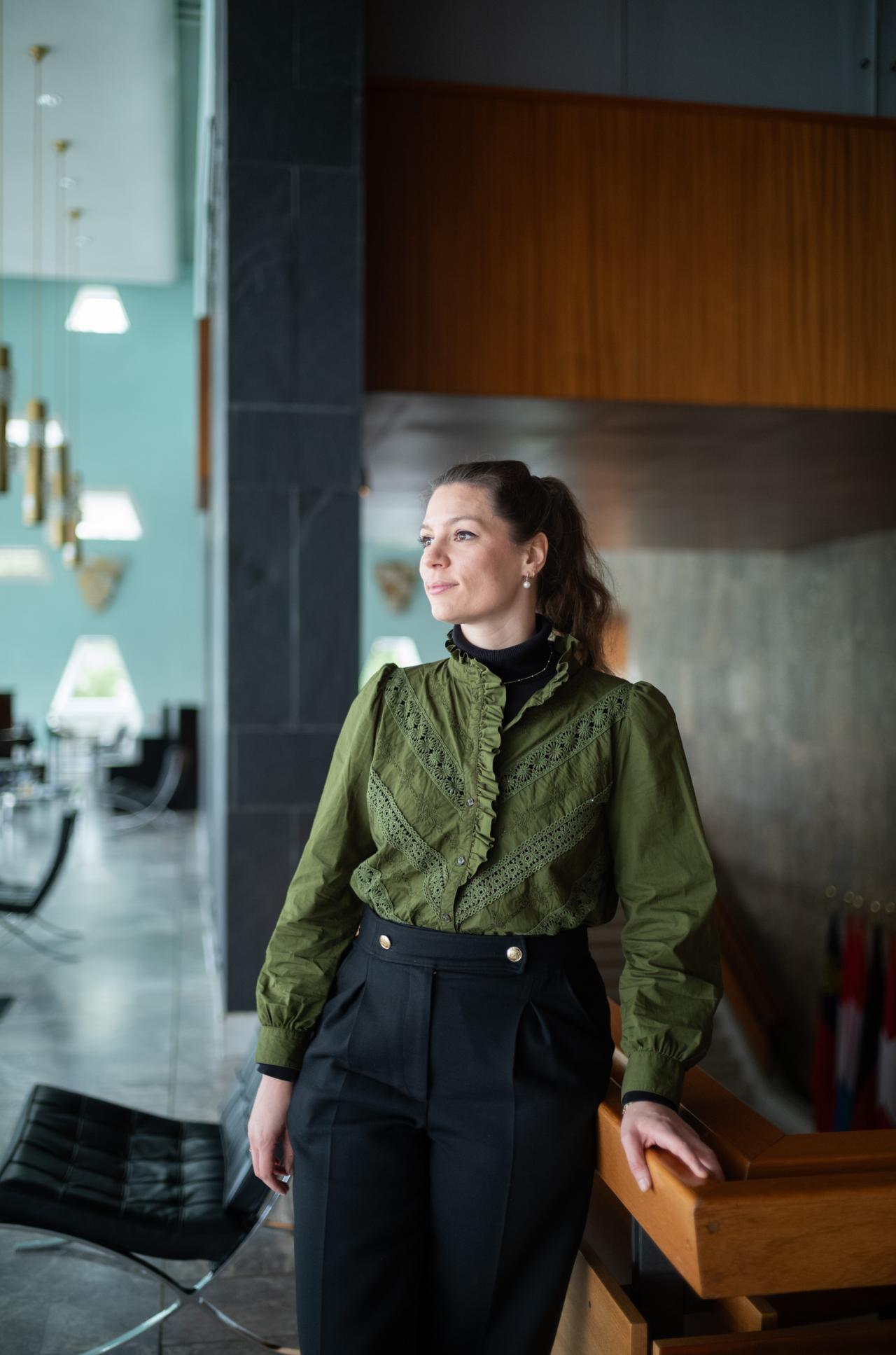
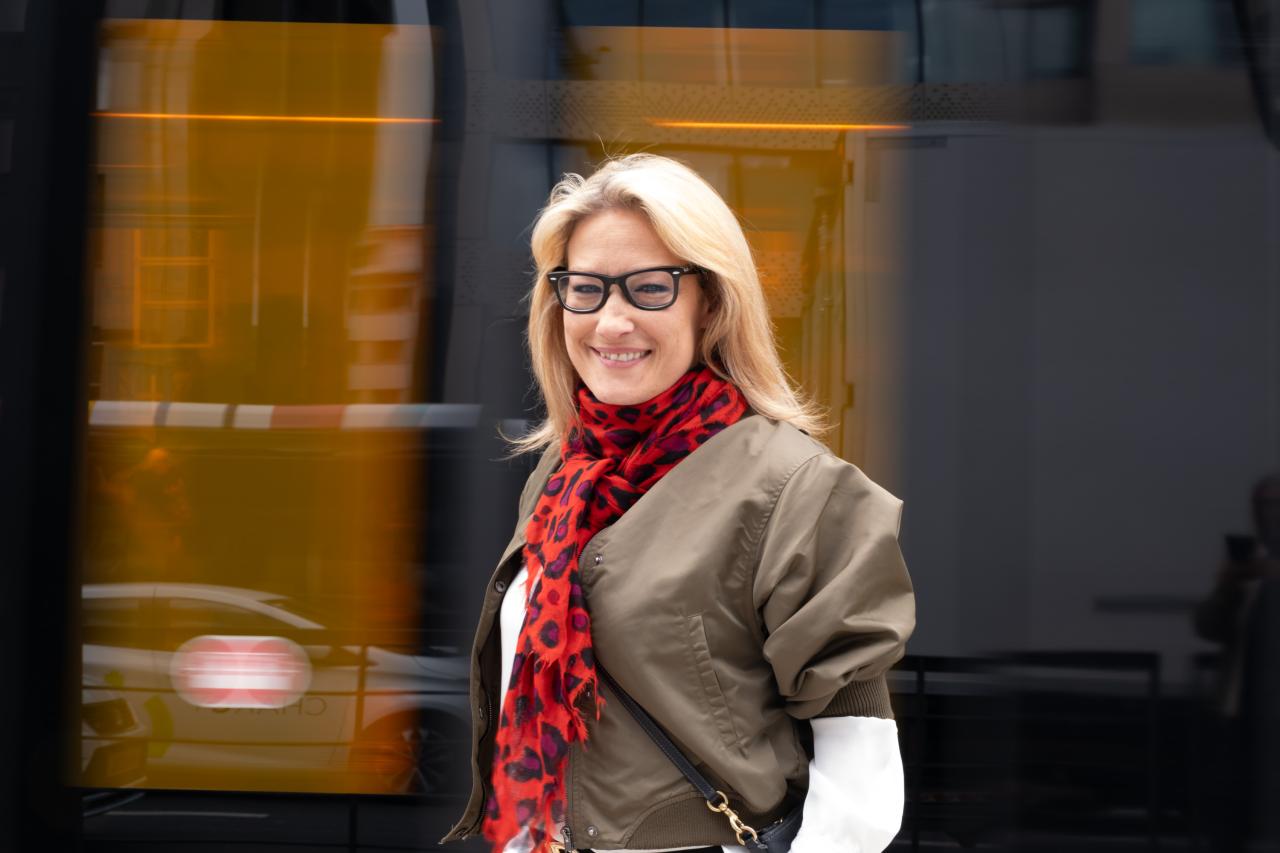
She describes herself as a quiet person. Although her life may seem exotic from the outside, she is by no means restless in her private life. She would rather read a book than go to a big party. "When I'm in Hong Kong, for example, I sometimes just sit in the park for three hours and watch people." This observation is not a pastime for her, but almost a method. People, bodies, postures, gestures – all of this flows into her work.
The power of encounters
Perhaps this is precisely the reason why her choreographies often have such an immediate effect. Jill Crovisier's work is not abstract. Her art is closely linked to life. She draws her inspiration from encounters, social issues, memories and cultural experiences. "There is nothing more beautiful than when people open up. Of course, dance also opens very personal doors, which is why the human element is so important."


It seems almost self-evident that she has never limited herself to a single role. Jill is not only a dancer, but also a choreographer, video artist, sound designer, dance teacher and producer. in 2013, she founded her own company, JC movement production.
When she talks about it, it quickly becomes clear how comprehensive her work is. She choreographs the pieces, is usually responsible for the music herself, edits sound material and works on videos and visual concepts. She even set up her very detailed website herself.
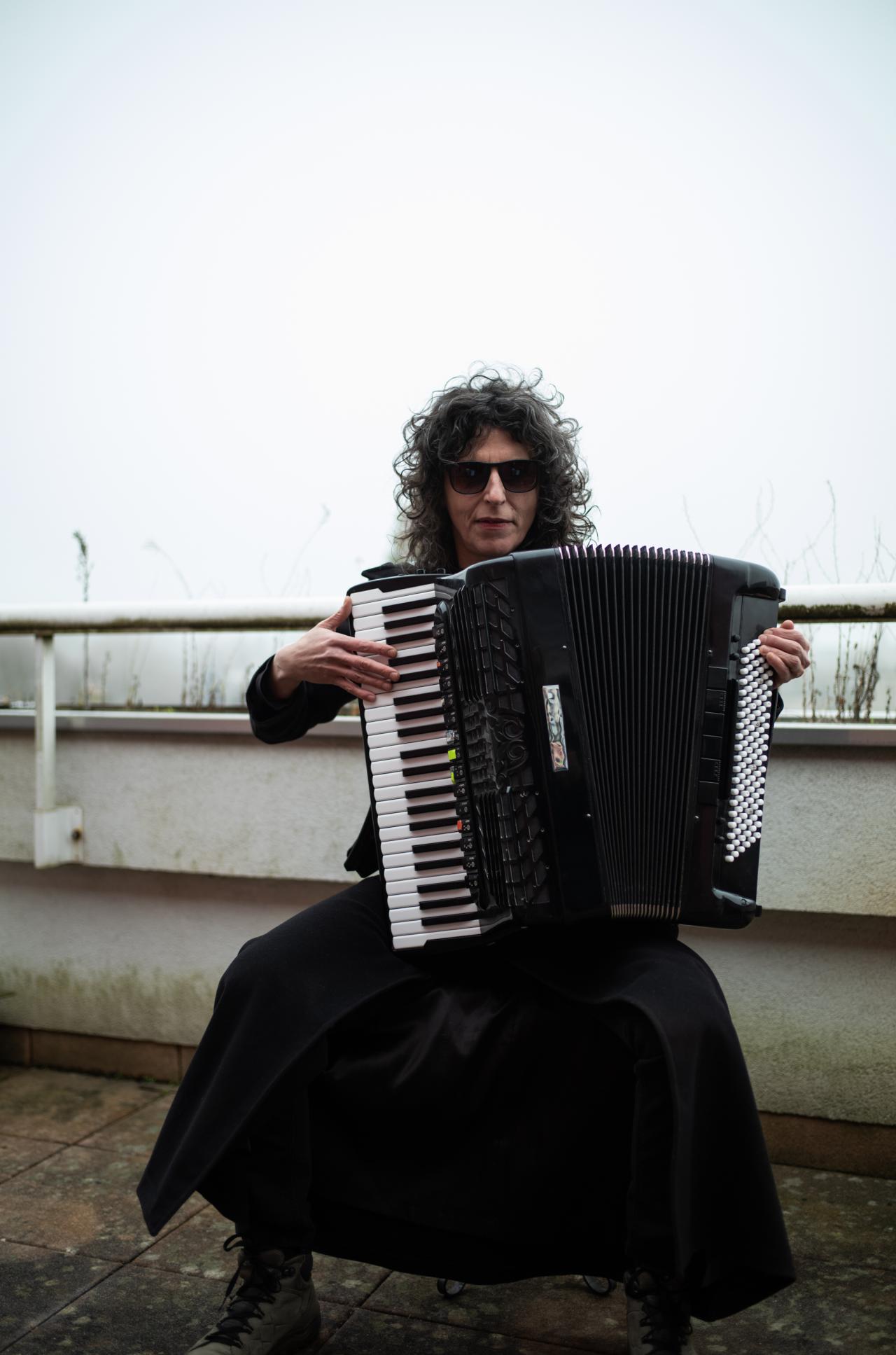
"This is perhaps also due to a lack of budget, " she says, and admits to being a super creative person anyway, but also a very curious one. "Give me an instrument and I'll spend the whole afternoon playing it. If the music feels right to me, then I'll use it."
Her real driving force seems to be curiosity. She works intuitively. If she can't feel something, it doesn't work for her. This applies to movement as well as music. She then says a sentence that perhaps explains a lot about her nature: "If no one cares about me, no one cares about what I do, so I just do it".
As soon as she starts to ask herself whether something is "in" or whether people will like it, she loses access to her work.
"I'm a super creative person, but also a very curious one. Give me an instrument and I'll spend the whole afternoon playing it."
Jill Crovisier
As consistent as this approach sounds, Jill Crovisier does not romanticise the reality of an artist's life. On the contrary. She talks openly about insecurities, about the pressure to keep going. "You're never in the moment. As soon as one project is finished, the next one is already waiting." Her mind is always moving on: the next application, the next rehearsal, the next trip, the next production.
Her day-to-day life is then also synchronised accordingly. Sometimes she flies off to Lisbon at three in the morning, only to be back at the theatre in Mersch by ten in the morning. She knows for herself that this pace cannot be taken for granted in the long term. "That has to change in the future, " she says.
Because even if dancers often get stronger over the years, their awareness of time also grows. She speaks openly about how she now looks at her life differently. "My dream was always to have a family. I'm 38 now, and the clock is ticking. These are topics that are a little taboo in art."
in 2019, Jill Crovisier received the Lëtzebuerger Danzpräis. An important award, no doubt. But when we asked her what such an award entails in concrete terms, her answer was surprisingly sober. She was delighted, of course, but it didn't bring her any more orders. "I also saw it as recognition in a way, but I was awarded the prize on a day when I was on tour in Taipei. They could have chosen a different date, after all, it was about me."
In general, Jill Crovisier is remarkably open about recognition. She says that she sometimes wishes for more respect, more appreciation – and by that she refers to Luxembourg in particular. Abroad, she is often recognised more for her work. Not through prizes, but through what she actually does artistically.
But none of this sounds bitter. Rather clear. Perhaps it is precisely this clarity that makes her so impressive. She knows the realities of her profession. She knows that art is not just about talent, but also about organisation, perseverance, strategy and stamina.

What remains with Jill Crovisier is a remarkable openness to change. She talks about the need to constantly reinvent and develop. She sees her future in movement, but doesn't yet know exactly what form it will take. Perhaps it will continue to be dance. Maybe something else. The important thing is to give something back to society.
She still travels a lot today, but less far than she used to. She senses that Luxembourg is once again becoming more of a place of the future. "For me, there's nothing better than landing on the Findel, I'm incredibly grateful."
The most difficult question comes at the end of the interview. How would she describe herself?
She laughs briefly. Then she falls silent.
"That's a mega-difficult question."
After a pause, she finally says: "I see myself as a person who carries many stories about my environment. Je porte les traces de la vie (which translates into 'I carry the traces of life', ed.), but that sounds like a guru now, " she adds with a laugh.
The sentence probably describes not only Jill Crovisier, but also her art. Because anyone who listens to her quickly realises: for her, dance is not just movement. It is memory, encounter, experience. A way of making life visible through the body. And this is precisely where her special power lies.