Listen to this article
With the change of throne from Henri to Guillaume, Luxembourg has opened a new chapter in its history. While the Grand Duchy is currently receiving more media attention at home and abroad than ever before, many are asking themselves what role the monarchy still plays today - between symbolic power, nation branding and political neutrality.
This article is provided to you free of charge. If you want to support our team, subscribe now.
Anyone from Luxembourg (or living or working in this country) who hasn't spent the last few days on the moon or abroad has been so inundated with articles, reports, documentaries, photos and live tickers about the Grand Ducal family and the change of throne that some people may even have briefly considered whether the introduction of a republic might not be the better option after all, given the medial overkill.
The election of a new president would certainly not have resulted in the same information overload as a change of throne. However, if Luxembourg were a republic, it would be just another dwarf state among many – with a head of state who is usually a deserving but often colourless politician, as is the case in many countries.
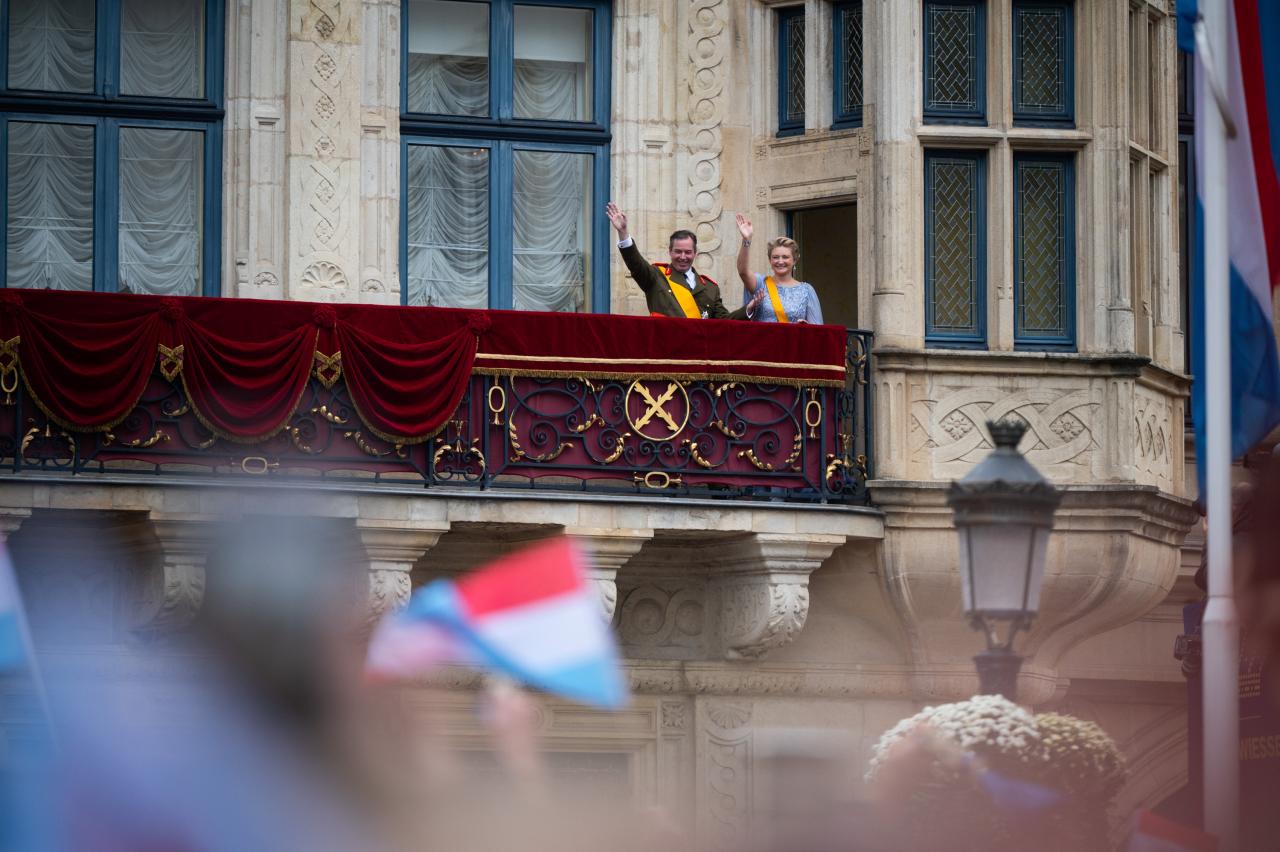
However, as the only Grand Duchy in the world, Luxembourg is something very special. There may be people who describe the Grand Duke as a better figurehead, but they are definitely wrong. A Grand Duke gives the country a face, at best even an identity, and anyone who has seen the cheering crowds, including many, many young people, who cheered the new Grand Duke on the day of the change of throne (and afterwards), will probably agree with us.
Almost everyone knows the King of England or Holland, but very few people know who the President of Ireland or Bulgaria is – and we are paraphrasing Deputy Prime Minister Xavier Bettel, who expressed himself similarly in a recent documentary.
"For a small country like Luxembourg, there are no better ambassadors than the Grand Ducal family."
For a small country like Luxembourg, there are no better ambassadors than the Grand Ducal family, although the door-opener aspect of economic missions is indeed true. The doors are always open for a Grand Duke or a Hereditary Grand Duke. This is nation branding par excellence: good for the economy and good for the image of the country, which is still often equated abroad with a pure tax haven.
As heir to the throne Prince Charles is only five years old, but the economic missions are usually carried out by the Hereditary Grand Duke, Grand Duke Guillaume will have to take care of the relevant trips himself over the next few years, and yes: the Hereditary Grand Duke's seat on the Council of State will also remain vacant for a long time.
The fact that the new Grand Duke once again emphasised his political neutrality in his inaugural speech is to be welcomed, as is his announcement that he intends to act as a bridge-builder. This may sound like a platitude, but a man like Guillaume really does buy into it.
Meanwhile, the déi jonk gréng proved to be spoilsports, sending out an angry message at the same time as the new Grand Duke took the oath of office in which they complained about the waste of taxpayers' money, while their older party colleagues in the Chamber of Deputies applauded the new grand ducal couple enthusiastically. But with the exception of the two déi-Lénk-deputies, who looked demonstratively grumpy, everyone did so anyway.
With Guillaume, most Luxembourgers are likely to be experiencing their third Grand Duke, but for many it will be the first time they have consciously witnessed the handing over of the baton.
Hopes are also high that Guillaume and his wife Stéphanie, the next generation of Luxembourg royals, will bring a breath of fresh air to the Grand Ducal Court, which can sometimes be a bit outdated, but of course without becoming too modern and too open, otherwise the monarchy would become too banal, and who needs a monarch then?
When Henri took over as Grand Duke 25 years ago, hopes were also high. Initially at least, he fulfilled them: Charismatic, likeable and a lot closer to the people than his father Jean. But then in 2008 he refused to sign the euthanasia law that had been legally passed by parliament – due to conscience concerns – which led to a national crisis.
The planned sale of the family jewellery and the planned disposal of part of the Gréngewald also made negative headlines.
For her part, Maria Teresa, the Grand Duke's wife, caused a real scandal when, a year and a half after the change of throne in 2000, she rounded up the editors-in-chief of the Luxembourg media to complain to them about her evil mother-in-law Joséphine-Charlotte, who was making her life hell as a commoner. Unprecedented!
In the years that followed, there were repeated accusations of harassment against the Grand Duke's wife, which led to a revolving personnel carousel at court. The so-called Waringo Report, named after the special representative Jeannot Waringo, took the initiative of the then-Prime Minister Xavier Bettel to address all these grievances, dismissals and redundancies, which led to the creation of the Maison du Grand-Duc, where the head of state's affairs were properly managed for the first time.
In the documentary film "Histoire d'un règne: 25 ans au service du Luxembourg", which was shown in the Philharmonie on the occasion of the bank holidays, Xavier Bettel, who was head of government for ten years, is not featured at all, which makes it evident that Henri and Maria Teresa are quite vindictive.
But it is also embarrassing that the latter initially cancelled interviews with the local press at the last minute at the end of her reign, only to complain loudly to the international glamour media that they had felt like they had been in a gilded cage all these years.
Henri must have felt a huge weight lifted from his shoulders, as he is now free as a bird after his abdication.
At this point, we naturally wish the super-likeable new Grand Duke and his wife all the very best, but above all that his reign does not end like that of his father.
The king is dead, long live the … err: the Grand Duke abdicates, long live the Grand Duke!