Socialisation currently uploading: How Gen Z actually connects
By Maiwen Rerat, Julja Sheqeri, Lex Kleren
Listen to this article
Phone-addicted and unable to connect: That's the stereotype about Gen Z. A psychologist and three young adults in Luxembourg tell a different story.
This article is provided to you free of charge. If you want to support our team and promote quality journalism, subscribe now.
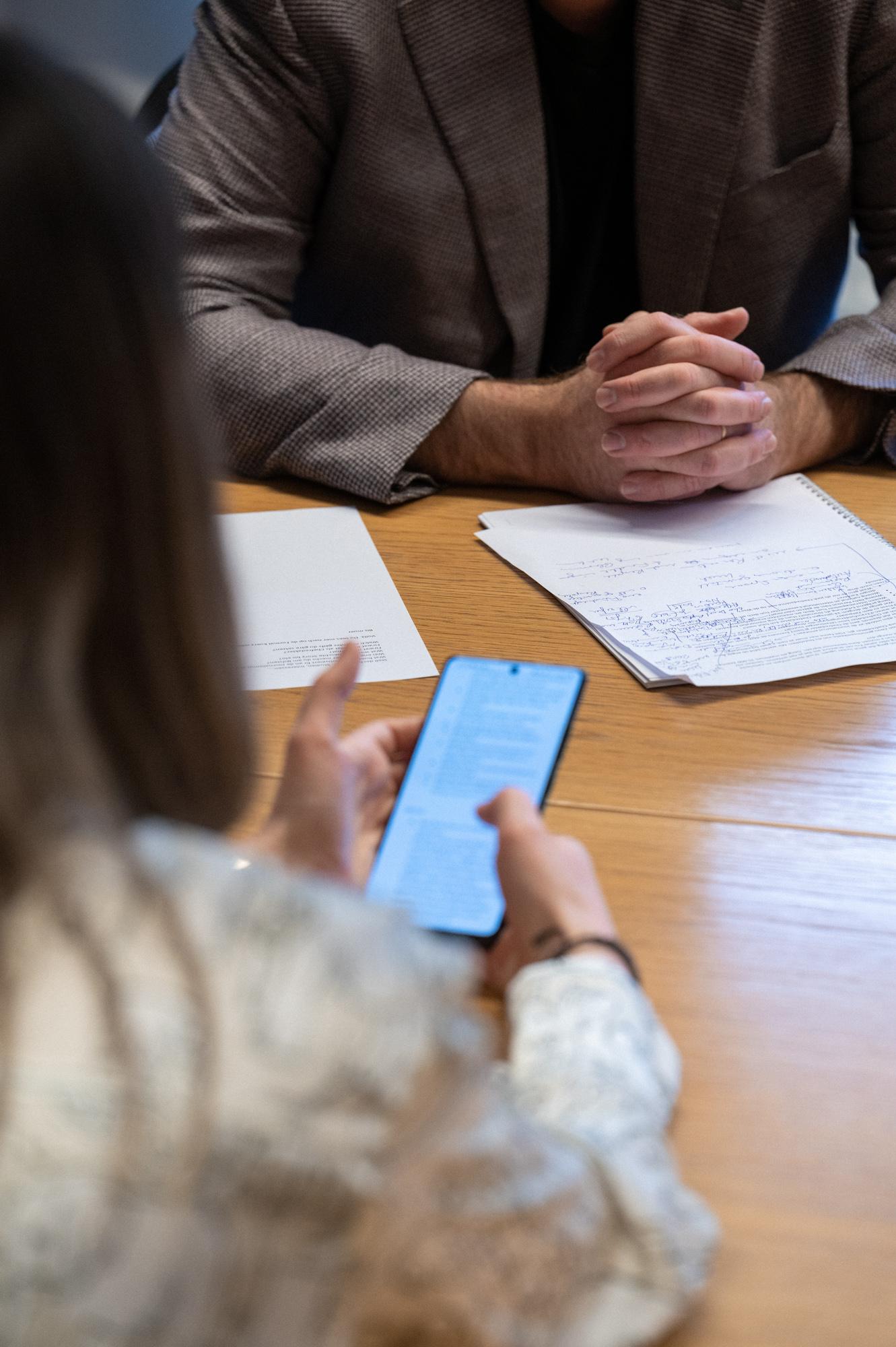
Most nights, Jessica does not reach for a book. She gets into bed, opens her phone and scrolls. She goes on social media, writes to her friends, scrolls through her feed or whatever comes up. "That is how I interact at night", she says simply.
Sounds very familiar, right? For many young people, this is a regular and relaxing Wednesday night. For others, especially their parents, this is proof of the decline of humanity. "You and your phone…", "When I was your age, I used to go out…", "It's always your damn phone…" This kind of lecture has become a universal experience within the generations that grew up with technology. This is our image: a young person sitting, slumped over a glowing screen in the dark, emotionally unreachable and showcasing the deterioration of social skills in real time. However, is this image accurate? Has the integration of technology in everyday life really dragged our social skills down? Has the digitalisation of our relationships occurred, and has it hollowed out our ability to connect with each other?
We have spoken with three young adults, a youth centre educator and a psychologist, and the answer to our question is considerably more nuanced than the discourse tends to suggest.
The bubble…
Mélanie, a university student in music, depicts a picture that we are all very familiar with: "When [people] go out, they are just on their phones. I have seen a lot on trains, when you are just bored, you just pick up your phone. And then, when you look around, they don’t look out of the window anymore or pick up a book." It is undeniable that digital tools – the devices and platforms we carry mostly in our pockets – occupy a lot of space in our lives. Jessica estimates that she uses them for 80 to 90 per cent of her daily activities. Raquel on the other hand estimates around 50 per cent, before adding: "It can go from 70 to 30 per cent depending on the days and on my mood." None of them are unaware of the pull they feel from their personal devices. Mélanie describes it plainly: "Everything is kind of made to be addictive … It's a big word, but still… so we are always relying on it, and everything is made so that we come back to the phone."

Mélanie Martins
The traditional distractions do seem to be losing in popularity. But these kinds of vague figures do not tell anything concrete. The importance lies in what the digital tools are used for. Jessica is not passively consuming online content at night, she is talking with acquaintances and maintaining family relationships across time zones with cousins in France and Cape Verde. Mélanie uses her Ipad for music notation at the Conservatoire, messages to maintain friendships, and video calls with distant family members in Portugal. Digital devices and platforms do not replace social life. For many, it is an infrastructure through which social life nowadays functions.
Dr. André Melzer is a psychologist interested in media and social psychology and the supervisor of the Media and Experimental Laboratory in the University of Luxembourg. During the interview, he quickly debunks the idea that relationships are becoming digitalised.
"I don't think there is any hard and fast definition of digitalisation of relationships – which, by the way, suggests that everything changed or how relationships are established goes down to digitalisation, which is definitely not true."
What we are witnessing, he suggests, is not a major shift in how humans socialise, but the incorporation of a new medium in our social habits. The key distinction lies between a deterministic and an interactionist perspective. The deterministic is implied in every parental lecture about screens. It holds the idea that technology itself, including social platforms, shapes a user’s behaviour by transforming them into superficial and isolated individuals. "This deterministic view in media psychology especially is not true. What we need is an interactionist view.", he states simply. People do not use digital platforms and tools passively, but they use them because specific motivations are fulfilled.
"Social media are tools, and it always depends on how you use these tools […]. If you have a hammer and you have a nail and you want to hang up your poster, perfect. If you hit someone with that hammer on the head, well, that's a bad thing, right?"
Dr. André Melzer, supervisor of the Media and Experimental Laboratory in the University of Luxembourg
"We have a natural, innate need to belong. We as humans are social creatures. Social media are tools, and it always depends on how you use these tools, whether or not [they] have positive or negative effects. If you have a hammer and you have a nail and you want to hang up your poster, perfect. If you hit someone with that hammer on the head, well, that's a bad thing, right?"
While this analogy is blunt, it is effective. The technology and platforms do not have agency and its effects depend entirely on the motivations and contexts of those using them. Although most of the time it looks as though we are in our own bubble or our own world, that doesn’t necessarily mean that this is actually the case. Nor should we judge people simply because they are using a mobile phone or another electronic device.
The Pandemic… again
The Pandemic in 2020 is often blamed as a cause for the dependency most people have with their digital tools. During lockdowns, screens became classrooms, cinemas and social spaces all at once. Research on the Covid-19 pandemic revealed that the situation increased loneliness and social isolation. As a 2021 study published in European Psychologist argues, the lack of face-to-face interaction intensified these feelings of loneliness and emotional distance. Dr. Melzer is clear that digital tools – electronic devices and social platforms – have their limits. "Nothing beats face-to-face interaction", he states, "Why is that? Face-to-face interaction makes use of all the channels that we as humans have in terms of communication (such as touch, smell, sight, ed.)". Digital platforms strip those away, which is also why we compensate with emojis in text messages. However, among the young adults we interviewed, the experience during the lockdown was far from universal.

Raquel, for instance, rejects the notion that the pandemic made her more dependent on digital communication media. "I was always like that", when asked about her preference of being alone, "I was used to being more alone, and then COVID made it change. It made me stay with some people when I did not want to." Jessica describes a very different experience, explaining that with Covid, she learned to spend more time with herself. Mélanie expresses a similar feeling, saying that she may not prefer being alone, but she learned to be alone a lot more. The pandemic has allowed them both to learn to feel comfortable in their own company by developing a healthy relationship with solitude. However, that does not mean that the need to be with other individuals has disappeared. Mélanie adds that "after COVID, everyone wanted to go out a lot more, so maybe we reminded ourselves that we still like that personal connection." Technology and social online platforms did not replace the need for physical presence, but it delayed it for a short moment. What the lockdown did was accelerate the integration of digital tools into everyday life. Schools relied entirely on online platforms, entertainment moved further into the screens, and social media became a central actor in communication habits.
Emily, an educator turned manager at the youth centre In Move in Neudorf, felt the shift in her work. She explains that during the pandemic, she had to rely on social media to stay in contact with the members of the youth centre. "For us, it was important to keep the connection with the youth", she explains, "The phones, Internet access and social media allowed us to continue having that connection with [them]." When the restrictions ended, these practices stayed. Now, the youth centre uses social media, for instance Instagram or TikTok, to communicate with members and to advertise activities. Digital spaces became an extension to their centre, rather than replace any aspect of the physical centre.
Drawing lines – Block, Restrict, Delete
Social media platforms are not only there for communication. They are spaces where people control how others perceive and interact with each other. Digitalisation has changed how young people uphold and manage these diverse and complex relationships, especially regarding personal boundaries. Blocking, restricting, or deleting contacts enable users in the digital sphere to have an instant form of control over who can get in touch with them. The young adults explained that setting clearer boundaries was made possible through these features. For instance, Jessica explained how Instagram allowed her to deal with negative interactions more effectively: "There, I [once] had a public profile on Instagram, and if someone like a guy came up to write to me, meaning to harass me or just say something that isn’t good, I would either block him or I would just restrict his messages." This shows how digital tools offer a direct way to protect one’s peace of mind online as a form of self-preservation, which differs from offline life, where distancing oneself from someone demands more effort. Over time Jessica realised that her attitude towards these tools evolved as she got older.
"After COVID, everyone wanted to go out a lot more, so maybe we reminded ourselves that we still like that personal connection."
Mélanie, student
"It’s a recent habit because before, I thought that it would be too much to block a person. But now that I’m older, I’m doing what I want. Now, it is not about what people think is good to do anymore."
Mélanie links this shift to wider societal changes: "Our society has grown to understand a lot better to set boundaries. We are in a time of age, where we talk a lot more about it. And we are much more aware of it, and I think that digitalization has definitely helped with it. Because you can just cut off people on your phone." She reflects upon how with a tap nowadays creating space is facilitated and socially normalized. Yet, the same ease that makes protection simple also encourages abrupt forms of disconnection.
"With my ex-best friend, we got into an argument, so I deleted her at that time. And I blocked her literally right after." Raquel provides a perspective on more drastic ways to use digital tools, which similarly raises the questions about the resilience of relationships.

Emily
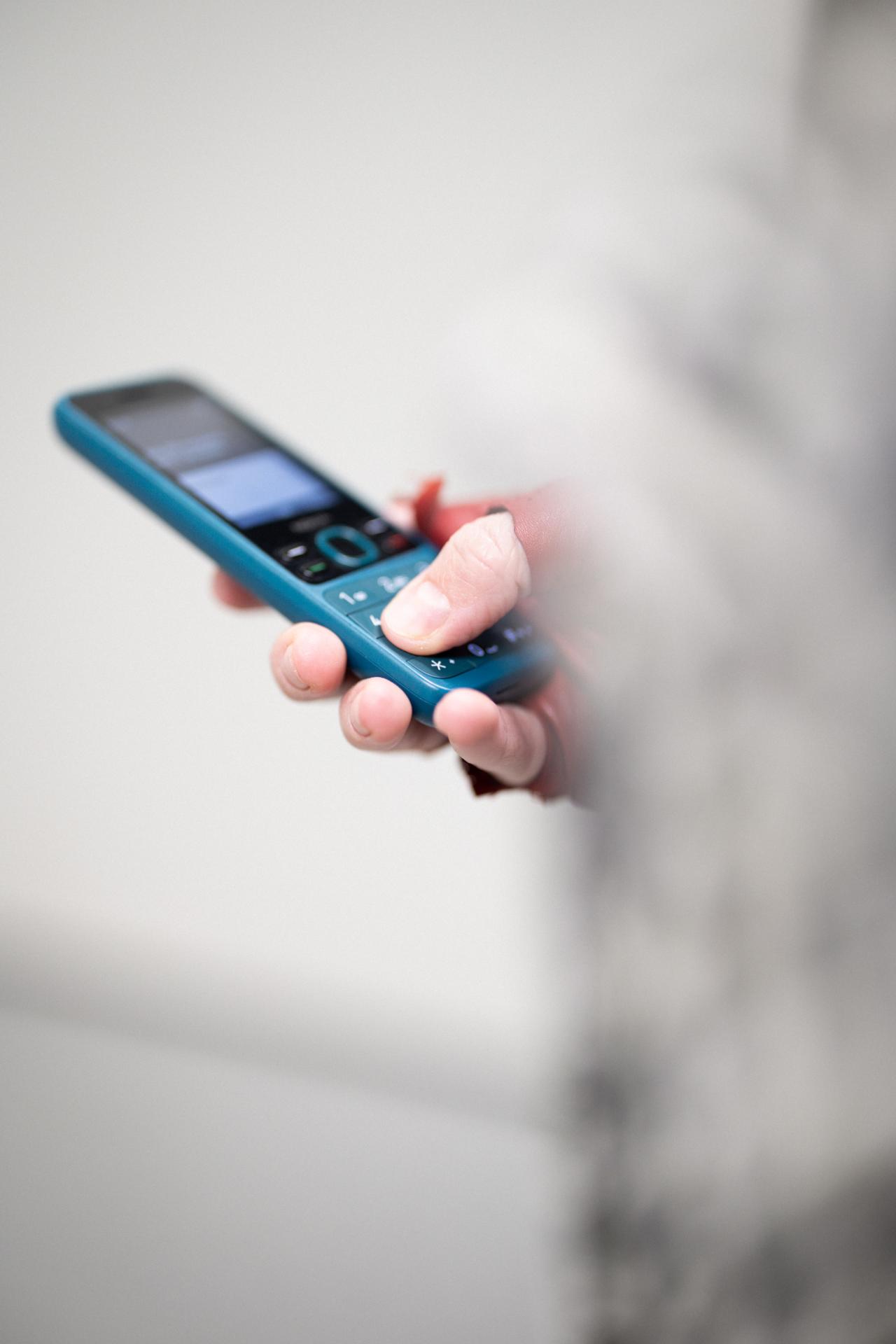

Dr. André Melzer offers a more nuanced outlook. He states that digital platforms do not replace offline relationships; they support them. "Almost every new technology does not mean that older forms get completely wiped out. They add something.", he argues. In addition, Melzer also realizes that the social media platforms are "important for us in our real life", as they are used to uphold real-life connections, to organize meetings, to preserve friendships, or to start romantic relationships. While these tools enable more clear forms of boundaries, which sometimes weaken personal ties, at the same time they also create a chance for relationships to grow beyond the screen and to equally bring them together.
A balance yet to be found
Mélanie’s final words "curious for the future, but also kind of apprehensive", capture how this generation stands in relation to digital tools. They did not choose the framework of Instagram or TikTok, just as the earlier generations had to deal with television. What they can choose is how they navigate within systems that were never built with their wellbeing in mind. Our generation is not doomed. The conducted interviews challenge the idea that young people have lost their ability to connect. They use the social media platforms to maintain relations or friendships across time by alternating between in-person meetings and online. Mélanie turns notifications off and practises sport and music in her free time. Jessica blocks without guilt, and Raquel deletes accounts when she needs to distance herself from interactive moments. Emily’s work encapsulates the goal. There is no need to choose between the digital sphere and real life, but rather learn how the two can coexist between, for instance, playing cards with friends and being able to watch a video. Yet, Raquel’s concern needs to be taken seriously, as she says that social media can influence in a negative way. She clarifies that people seek validation from strangers online, instead of talking to the friends and family in their real life. Dr. Melzer’s advice is simple; he reminds us that digital communication cannot fully replace a real-life human connection. That’s why, somewhere tonight, Jessica is on her phone, not lost in it and instead living with it, just as everyone else is too.

This article is part of the practical workshop "Working in the Media" at the University of Luxembourg. The students Maiwen Rerat and Julja Sheqeri are the authors of the publication and gained a global insight into the daily work of journalists. Melody Hansen, editor-in-chief, supervised them as they worked on their first journalistic article.