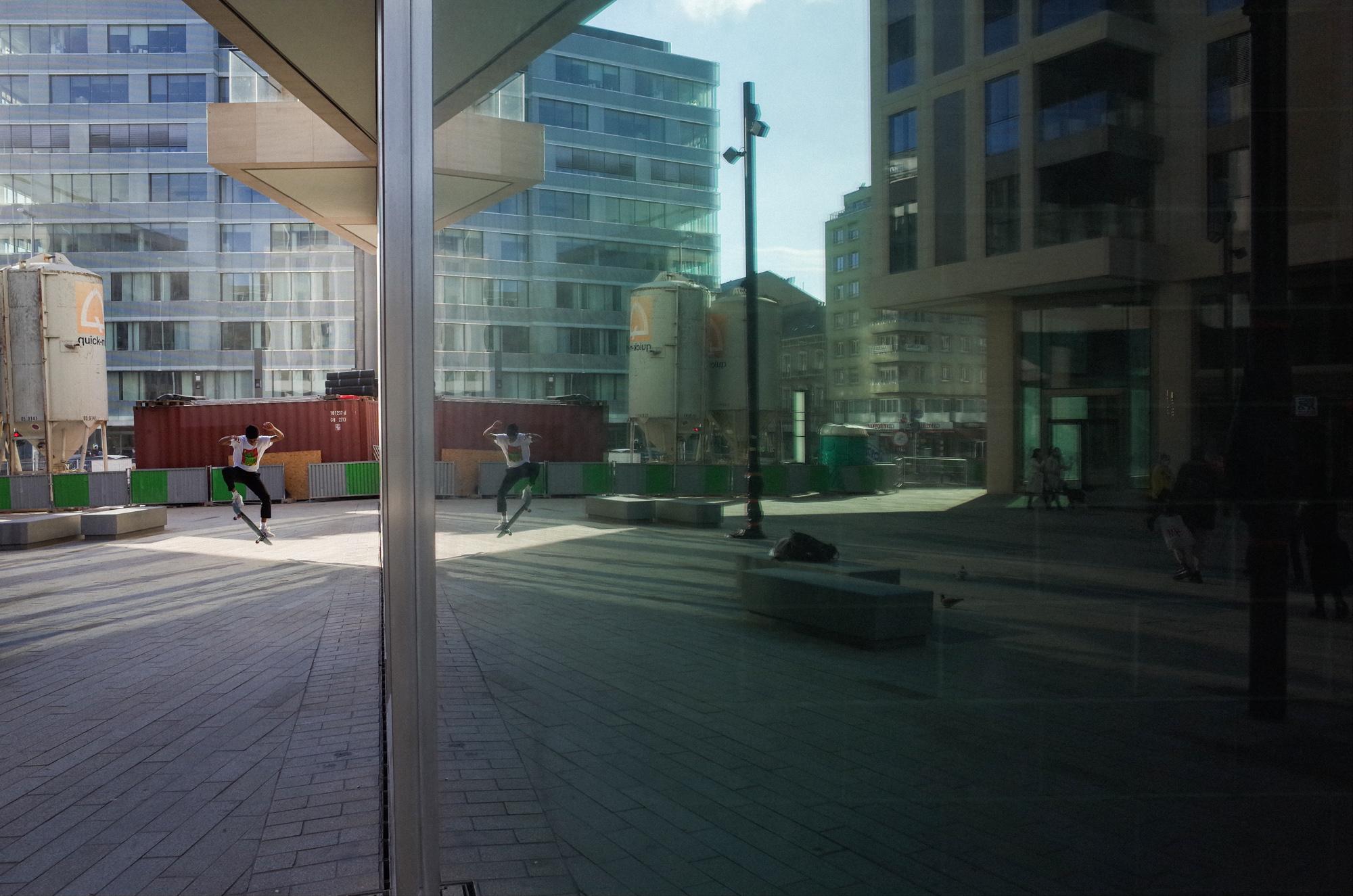
30 years of the Casino: "We want to remain experimental"
By Pascal Steinwachs, Lex Kleren Switch to German for original article
For 30 years, the Casino – Forum d'art contemporain has been a venue for contemporary art, experimentation, and encounters. To mark this anniversary, director Kevin Muhlen is not only looking back, but above all looking ahead: to an institution that aims to surprise and constantly reinvent itself.
When the Casino – Forum d'art contemporain opened its doors in 1996, Luxembourg sent a clear signal in support of contemporary art. Three decades later, the venue is an established player on the national and international art scene. However, the Casino does not see itself as a static exhibition space but – true to the meaning of its name – as a forum, as Kevin Muhlen, who has been its director since 2012, revealed to us in an in-depth interview.
Lëtzebuerger Journal: The Casino was founded 30 years ago as part of the European Capital of Culture programme. Until then, Luxembourg had been a cultural no-man's-land, a thoroughly provincial place in cultural terms. The Casino put Luxembourg on the cultural map for the first time. Yet the Casino's pioneering role is still not really recognised, is it?
Kevin Muhlen: That depends on who you're talking to. If you speak to the general public, we're perhaps not as well known as the Mudam, although we did host Manifesta 2 – the second edition of the European Biennale for Contemporary Art – back in 1998, which was a major event on the international stage. We also showcased many artists very early on.
With Lady Rosa, the pregnant replica of the Gëlle Fra, that caused quite a stir in the spring of 2001, the Casino certainly caused a proper scandal at the time. Since then, things have become much quieter around the Casino, at least as far as scandals are concerned. Has the local audience become more tolerant, or simply more indifferent?
Probably a bit of both. Back then, it was still possible to shock or provoke people more effectively. I think the public has become more sensitive to art and experimental forms. Indifference does, of course, play a part, too, because people see so many things on social media and feel they've already seen it all before they've even properly experienced it. As a result, they perhaps don't develop a real feel for it. In any case, it's harder to provoke people these days. If you do something in a public space that outrages people, that's obviously a different matter altogether – which was certainly the case with Lady Rosa. When we do something in here, people might not even notice it, or they simply aren't interested.
You want more? Get access now.
-
One-year subscription€185.00/year
-
Monthly subscription€18.50/month
-
Zukunftsabo for subscribers under the age of 26€120.00/year
Already have an account?
Log in