Stock market balancing act
Sponsored content Switch to French for original article
Listen to this article
2025 has already been full of twists and turns – and it’s only October. Tariffs imposed by Donald Trump, competition in artificial intelligence, geopolitical tensions… What impact do they have on the stock markets? That’s the topic of the current episode of the podcast Evergreens by Spuerkeess, now also available in article form.
Bryan Ferrari and his three guests evaluate how the stock markets performed during the first six months of the year. Is it better to step away from U.S. equities? What role does artificial intelligence play? And is Bitcoin still relevant?
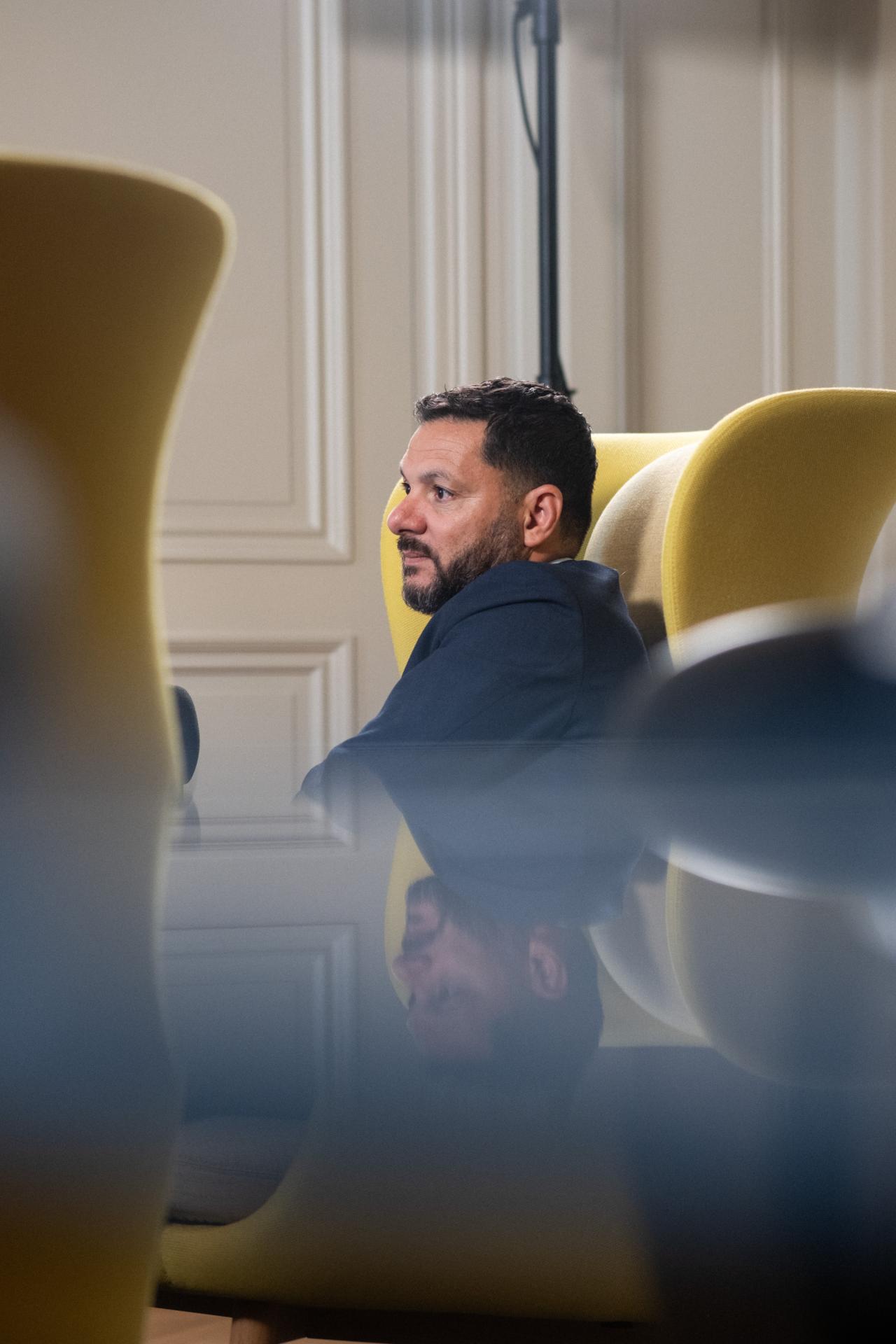
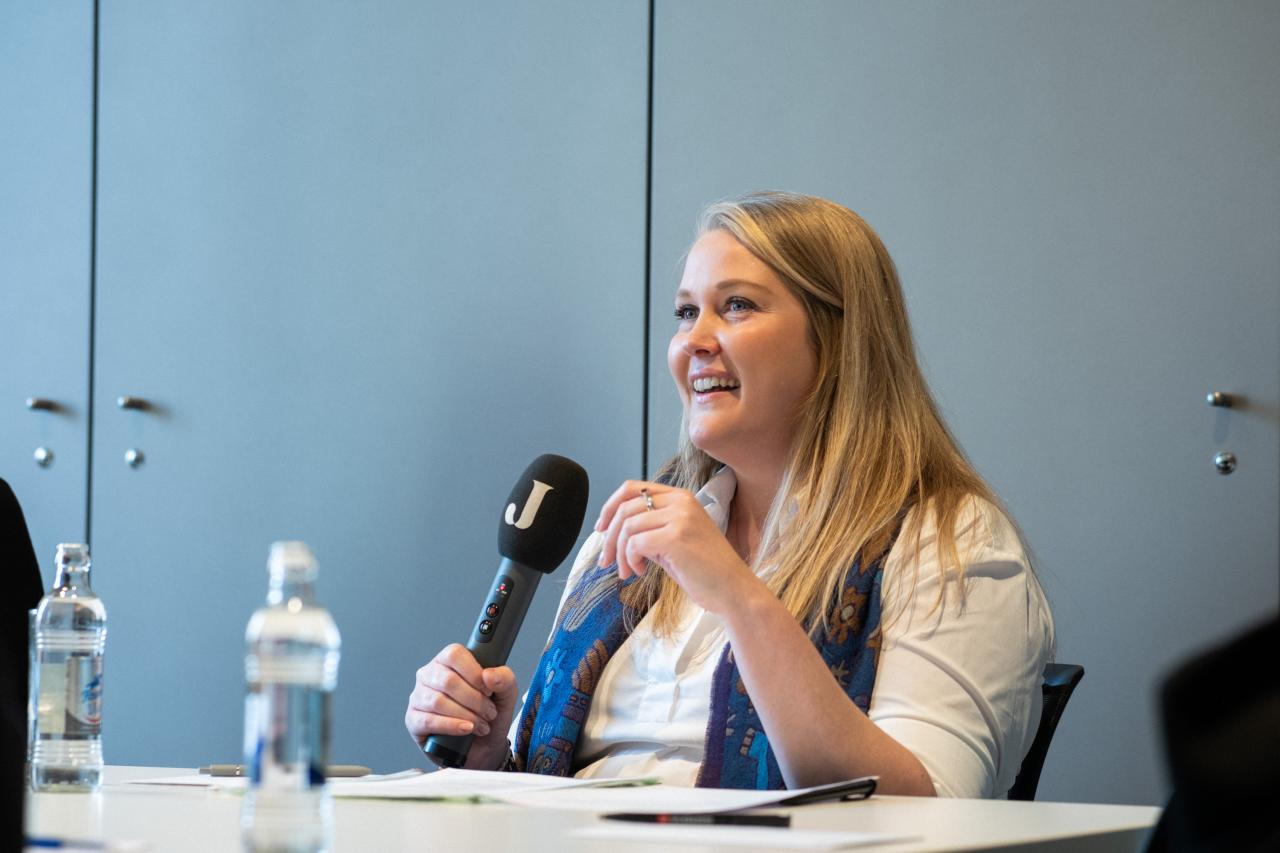
Julien Kohn and Nick Huberty are both Portfolio Managers at Spuerkeess. David Schmit, meanwhile, is a Private Banking Advisor there. A recap of a busy first half of the year – from the balcony of the courtyard at 19 Libérté.
Bryan Ferrari: Let’s get straight to the point. How did this semester go?
Nick Huberty: Overall, quite well. A surprising answer, I admit. This morning, we had a briefing with colleagues from the institutional departments. We reminded them that aside from a small incident in early April – a correction of about 20% in just a few days, which is already almost forgotten – performance on the markets has, at first glance, been excellent. I say at first glance because there’s a downer for European investors: the euro has strengthened significantly against the dollar. That squeezes the performance of a U.S. equity portfolio for an investor in euros. In other words, what looks good at first sight on the U.S. side translates, for a European, into performance that remains negative, since the euro has gained around 15% in value.

Nick Huberty
Ferrari: The year began on an euphoric note with U.S. Exceptionalism. Highly valued companies, but America First. Donald Trump was about to add fuel to the fire, and the U.S. economy was expected to keep growing. Then a small shock came from China at the end of January: Deep Seek.
Julien Kohn: Yes, exactly. A new artificial intelligence. An open-source AI which, according to the first announcements, was at least as powerful as the American ones – but at a much lower cost. That calls into question the massive investments we’ve seen in recent years from the big U.S. tech players. The question arose: Is it really worth it? And above all, do we truly need those ultra-powerful chips supplied by Nvidia? Those investments were called into question. Even Nvidia’s valuation was debated. That triggered a small market correction.
Ferrari: A large part of stock market gains depends on AI. If the Chinese can achieve the same results for less money, doubts inevitably arise …
Kohn: And those doubts remain. Nothing has really been confirmed yet. Is it actually true? Can they produce at a lower cost? Is their AI really on par with what we have in the West? And most importantly, are those massive investments still justified? That’s what unsettled the market a bit.
Huberty: In terms of performance, we could feel it. In February, U.S. tech stocks clearly underperformed. Since then, most of them have bounced back strongly. Sixty percent of the S&P 500’s performance comes from the Magnificent Seven. And even then … Apple and Alphabet are negative this year. Without them, the effect would be even more extreme. In other words, Nvidia – and also Meta – account for a disproportionate share of the U.S. market’s performance.
Ferrari: Then came Liberation Day.
David Schmit: On April 2, to be precise. I think the market had already priced in a high level of volatility for global equities. But April 2 still came as a surprise, since the tariffs imposed by Donald Trump weren’t expected on that scale. That said, he quickly backtracked with a 90-day pause on the tariffs, which gave markets some breathing space. Even so, at this stage, we don’t yet know how it will all play out in the second half of the year. Among clients, U.S. Exceptionalism is clearly being questioned. U.S. holdings had a very dominant weight in portfolios, and there is now a real demand to rebalance, diversify further, and adopt a broader global allocation.
Ferrari: You could say our clients benefited greatly from the extraordinary U.S. performance of recent years – and eventually ended up with a kind of "U.S. asset hangover"…
Schmit: The track record of the past ten years strongly favors U.S. markets in terms of outperformance. Being underweight – or not invested at all – in the U.S. was clearly not a tactical advantage in portfolios. But over time, one has to ask whether U.S. weighting hasn’t become a little too dominant. Then events like trade conflicts or Deep Seek come along, prompting a reassessment of valuations and a closer look elsewhere to identify opportunities in sectors that have been somewhat overlooked in recent years.
Ferrari: Objectively, I don’t think it was the equity market that pushed Trump to pause on tariffs. It was another market that put some pressure on him …
Kohn: The bond market, yes. We are all aware that the U.S. has massive public debt. With that famous American Exceptionalism, they were able to finance cheaply and raise huge sums. The fear is that this won’t last forever. The American status quo – and that of the dollar – is being questioned. Investors sold off bonds, and yields went up. The higher yields rise, the more expensive debt servicing becomes for the U.S. government … which is already heavily indebted. In the long run, that’s hardly sustainable. If rates keep rising, it puts both the economy and the state under pressure. We’ve seen this upward move in U.S. yields, and that’s probably what pushed Donald Trump to ease off.

Julien Kohn
Ferrari: By the way, Donald Trump is no fan of his monetary policy chief. If he could, he’d take care of it himself …
Huberty: Yes, he’s firmly convinced he would do a better job than Jerome Powell at the head of the Federal Reserve. Not long ago, in one of those famous interviews on the White House lawn – helicopter noise in the background, in the heat of the action – he said: Sometimes I'm nice, sometimes I'm nasty, nothing works. I invite him for lunch, for dinner, and he wouldn't drop, he wouldn't lower the rates. Well … he may not have fully grasped that the strength and credibility of the dollar rest on the central bank’s independence – just as in other developed countries. But he does have a point: if rates were 2 or 2.5 percentage points lower, it would be a massive boost for the U.S. budget, since they currently pay a bit more than $1 trillion a year in interest just to service the debt. If, hypothetically, those charges were cut in half, that would bring it down to $500 billion – a colossal impact. But he cannot steer monetary policy, and that will remain the case. The only card he has to play is that next year Jerome Powell’s term comes to an end, and he will not be renewed. On his replacement, though, Trump will have a say. He’ll likely choose someone more dovish, who will cut rates as much as possible. Zero, he won’t get. But starting next year, one can expect a looser monetary policy in the United States.
Ferrari: All of this doesn’t exactly help bolster confidence in U.S. monetary policy. There’s also a reason Jerome Powell doesn’t want to cut rates just yet … The situation is fundamentally different from ours in Europe, for instance.
Kohn: One could argue for a cut, too. Because inflation has receded quite significantly. That’s a bit of the crux of the matter: tariffs potentially mean higher prices for consumers. Higher prices mean inflation. The fear is a resurgence of inflation. Hence, the Fed’s caution, and its reluctance to cut. The economy is doing well: full employment, strong consumer confidence, rising stock markets … The American consumer doesn’t feel much negativity. But the risk is that inflation comes back. So the Fed waits.
"After that, it all depends on how you want to sleep at night. A concentrated portfolio of just a few names can deliver excellent performance, but you also see how quickly it can fall back down."
Julien Kohn, Portfolio Manager at Spuerkeess
Huberty: Factually, so far inflation has been surprisingly weak. It remains on a slightly downward path in the U.S. In April and May, when the first effects of tariffs should have shown up, there was nothing in the data. That allows Trump to say: You see, my tariffs work, they bring plenty of revenue to the budget and inflation hasn’t woken up. The Fed counters that the effect may come later. It’s proceeding with extreme caution. It waits, and waits … maybe too long.
Ferrari: Let’s talk a bit about interest rate policies. One could say the rest of the world is benefiting from U.S. policy. A weaker dollar is good for us as energy importers. Drill Baby Drill helped bring oil prices down. As a result, the European Central Bank made the rather easy decision to cut rates. But now, that’s over, said its president Christine Lagarde.
Kohn: I wouldn’t bet on that. As you said, the dollar has weakened. We import a lot. That’s rather disinflationary. We also have other trends: cheaper oil, more digitalization … disinflationary forces. Should we stop here? I don’t think we’ll fall back into negative territory, or to 0%, but I wouldn’t rule out two or three additional cuts over the next twelve months.
Huberty: A strong euro acts like a double-edged catalyst. On the one hand, it makes imports cheaper and reinforces the current disinflation. On the other hand, we are a continent of exporters. It hurts our competitiveness and, ultimately, growth. Yes, we pay less for imports, but we earn less on what we export.
Ferrari: A zero-rate policy is far off, but we’ll have to get used to rates staying low for longer. For clients positioned in term deposits or bonds, generating a real positive return will be tricky …
Kohn: We’re entering a phase that recalls 2010–2020, with the famous TINA – There Is No Alternative. We’re not there yet, but bonds still offer attractive yields. But if they keep falling, we’ll return to a situation where you have to re-expose yourself to equities, because bond yields won’t be enough anymore.
Ferrari: This year, the European stock market has outperformed the U.S. That’s good news. What’s behind it?
Schmit: For our clients, the angle of devaluation matters. The America First theme, which we expected more of in late 2024 or early 2025, is less pronounced than we thought. Some sectors are showing outperformance and growth outside the U.S. and beyond the AI and tech duo we’ve seen over the last five to ten years. In Europe, industry is in strong demand. The geopolitical context argues in favor of defense. And in terms of allocation, financials carry a lot of weight in the indices; they’re well capitalized, and they pay dividends. For European investors seeking yield and cash flow, this has been very attractive in the first half of the year.
Ferrari: It also feels like more clients want commodities. Is that linked to diversification, or to the geopolitical context?
Schmit: Probably a bit of both. Commodities are making their way back into portfolios. The geopolitical aspect matters. And the idea, when you add alternative asset classes to traditional portfolios, is to optimize the risk-return profile – thanks to their low correlation with equities and bonds. They serve as a hedge. If you believe structural inflation will stay somewhat higher, then commodities make sense in portfolios. Gold and precious metals are strong themes. We see strong interest, not only as a safe haven, but also as yield-generating assets. And the performance speaks for itself.
Ferrari: Gold has doubled in five years … One asset that seems to be hugely popular in the U.S. is Bitcoin. Last year, if I remember correctly, about $70 billion went into the largest Bitcoin ETF. And this year, for a risky asset, Bitcoin has held up quite well. Perceptions are changing – at least in the U.S. Over there, it’s become a legitimate asset class. Here, it’s still a different story. Do you agree?
Huberty: They have a new spokesperson who, by the way, brought some people back to the markets. They also benefit from more favorable legislation. But as for cryptos … I’ve noticed that only Bitcoin has performed. The others, not really. And once again, it has proven it is not a hedge. When the S&P drops, so does Bitcoin – and vice versa. Let’s move on.
Kohn: Last year, we were already asking ourselves what Bitcoin actually is. It’s called a cryptocurrency, but it isn’t really one. It’s far too volatile to serve as a means of payment. We were already moving toward the idea of digital gold. I think that’s one of the factors that explain its resilience.
Ferrari: It remains unpredictable. In some segments, especially in the U.S., you can sense an euphoria where slightly irrational things happen. Irrational … good or bad segue into green assets, which have once again taken a heavy hit.
Kohn: The world swings from one extreme to the other. We probably went too far with sustainable investing. Everyone was talking about nothing else. Then we had to acknowledge that we live on a planet where wars exist; some companies that couldn’t be included in certain indices or funds turn out to be essential for resilience and security. The mindset has changed, and green investments have been hit hard. In the long run, though, I remain convinced the theme is crucial. We’re sitting on a terrace, it’s ten in the morning and already 32°C. Climate change is very real. In the long run, the theme remains important.

David Schmit
Ferrari: Is this the year diversification makes a comeback, after years when it was enough just to buy American?
Huberty: Not really. Europe outperformed in the first quarter. In the second, we’re already lagging behind the U.S. Since the beginning of the year, Europe has held a slight lead, but that comes down to a handful of names. The German DAX, for example, is largely driven by Rheinmetall. That’s not broad-based performance. So this year, diversification has actually been more of a drag. To make it a record-breaking year, you needed a very concentrated portfolio with a few strong names. Again, titles from the Magnificent Seven – and Rheinmetall. Broad diversification, this year, weighs on performance.
Kohn: After that, it all depends on how you want to sleep at night. A concentrated portfolio of a few names can deliver excellent performance, but you also see how quickly it can drop again. A more diversified portfolio doesn’t always capture the mega-boosts, but when markets shake, the decline is slower. Everyone has to find their own balance – there is no one-size-fits-all.
Ferrari: To wrap up, I’m sure you’d like to try a little forecast … What will the second half of the year look like?
Kohn: It’s very difficult. Markets have made strong gains; we’re at historic highs. The economic backdrop remains solid. In some parts of the world, rates are still falling and liquidity is plentiful. All pro-market factors. But I’d rather not go too far out on a limb.
Huberty: The only forecast I dare make is that the peak of one-day volatility has probably already been reached. Could volatility rise again? It’s possible. More likely, it will just stay a bit higher for longer. The key point now is corporate earnings. In the first quarter, tariffs were sector-specific, not across the board, and U.S. results were generally stronger than Europe’s. The question is: what about in the second quarter?
Schmit: I agree. It’s complicated. I think we’ll move away from Twitter and get back to fundamentals. Corporate earnings, sentiment surveys, soft and hard data. That will give us a six- to nine-month outlook and a sense of how the indices will perform in the second half of the year.