Coffee micro-roasters conquer the Luxembourg market
By Sherley De Deurwaerder, Misch Pautsch, Lex Kleren Switch to German for original article
Listen to this article
Three Luxembourg micro-roasters have turned their passion into a successful business model. How the entrepreneurs manage to pass on low margins to their customers despite rising purchase prices and make coffee consumption more sustainable.
Whether it's for waking up, on the go or as a treat: a cup of coffee is an often underestimated consumer product that can be enjoyed by young and old alike. According to Statista, Luxembourg's coffee industry will generate total revenue of around 448 million euros in 2024. Last year, the sale of 8.21 kilograms of roasted coffee per capita in Luxembourg generated an average per capita income of around 590 euros.
Within the coffee market, speciality coffee represents a niche whose demand is increasing on a global level, according to Statista. According to the definition of the Specialty Coffee Association (SCA), speciality coffee is the result of close cooperation between all players in the production and retail chain, whereby they consistently maintain high standards and excellence.
In Luxembourg, too, a handful of small entrepreneurs have dedicated themselves to the art of roasting speciality coffee, opening up an economic niche that focuses on quality, sustainability and craftsmanship.
The down-to-earth path to self-employment
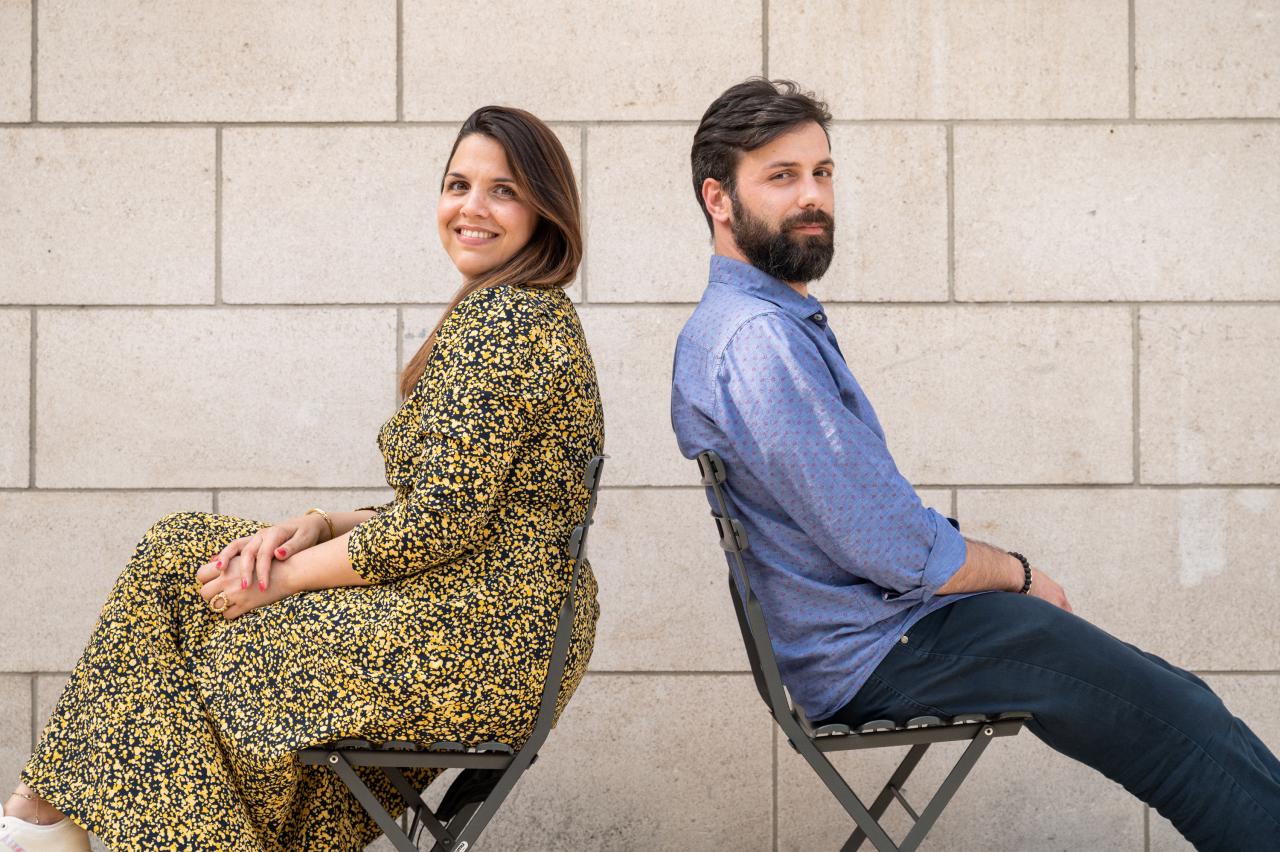
All beginnings are difficult, especially when two people take their first steps towards professional independence. Thomas Süß and Sandra Mignani, the couple behind Collette Coffee Craft, professionalised their hobby into a weekend job that they can pursue alongside their permanent employment. The fantasy of having their own small café in their retirement years had existed for some time: But on a private outing, they came across listed premises in Vianden. The couple seized the opportunity and have been giving the café a new lease of life since 30 September 2023.

Thomas Süß

Sandra Mignani
Vincent Della Schiava and his godfather Patrick Gianni launched Feierboun Coffeeroasters during the COVID-19 pandemic. The coffee was first offered only in an online shop and on events. A few years later, the small but cosy shop was opened in Luxembourg City, which allowed for more consistent contact with customers.
"We were both in a situation where we wanted to do something in life that we were 100 per cent passionate about. This meant that we would get up every morning, and regardless of whether it was a good or bad day, we found meaning and joy in what we were doing, " recalls Della Schiava. For the two of them, it's about more than just coffee and business management: rather, it's about making a difference and contributing to ensuring that the coffee farmers at the other end of the production chain can live and continue to develop.
How coffee quality is defined
-
The SCA score determines the commercial value of coffee. In Q-gradings, the quality of the coffee is assessed on the basis of a standardised 100-point scale. A coffee with a score of at least 80 is considered a speciality coffee, and a score of 80 to 84.99 is a very good coffee that impresses with its clear aromas and high quality. Coffees with a score between 85 and 89.99 are classed as excellent and are characterised by more complex aromas, higher acidity and a fuller body. These coffees are often described as floral or fruity. Outstanding coffees with a score between 90 and 100 are extremely rare and are sold at auction for a high price.
-
During Q-grading, certified coffee tasters systematically assess coffee samples. Before roasting, the green coffee beans are checked for defects such as breakage or insect infestation. The samples are then roasted in small quantities to bring out the flavour characteristics of the bean.
The tastings are known as "cuppings". During the cupping process, the brewed coffee is evaluated based on factors such as aroma, flavour, aftertaste, acidity and body. Scoring is then carried out, followed by feedback to the producers.
-
Another aspect of quality control is screening, in which coffee beans are classified according to size. The beans are passed through sieves with different hole sizes, known as 'screens'. The larger the bean, the higher the quality, as it has more uniform and better developed flavours. The price of the beans is determined on the basis of this size.
Overall, running a business within such a niche industry is not easy. Not only because it is a costly business that requires a variety of tools and expertise, but because it involves many sacrifices, a good work ethic and the ability to solve problems.
Yann Castagna from CafeTree can also confirm this experience. He and his wife Nikolett Suli started operating the CafeTree CoffeeTrucks eight years ago. Since then, the boundary between work and leisure has often been difficult to define.
"We didn't want to invest too much or take too big a risk, " explains Castagna. In contrast to Collette Coffee Craft and Feierboun, it wasn't the coffee that brought them to self-employment, but the desire to be self-employed that brought them to coffee. The advantage of the coffee truck was that, unlike with food, little waste is produced. In addition, roasting does not necessarily require training and education: "You can work your way into it very well on your own. You can also get a lot of information online."
"It's a very down-to-earth business niche. Everyone helps each other and we enjoy exchanging ideas."
Yann Castagna, CafeTree
He also appreciates the peaceful, mutually respectful interaction within the scene: "It's a very down-to-earth business niche. Everyone helps each other and we enjoy exchanging ideas."
All-round social pricing
On entering the various establishments, we were immediately struck by the strikingly down-to-earth pricing of the drinks – despite the fact that CafeTree, at least, has experienced increases of around to 20 to 30 per cent in the purchase price of raw beans in recent years, as Castagna reports. Both he and Della Schiava independently explain the reasoning behind their pricing. "We sometimes pay more for green coffee than some commercial coffees are sold for, including roasting and profit margin, " estimates Della Schiava. However, this pays off through high quality, transparency, and long-term business relationships with the coffee farmers. Price increases only occur when the cost of purchasing raw beans rises.
"These are difficult decisions because you have to think about how to react to price increases and whether this means you have to adjust your own sales prices, " says Castagna. However, you also have to think long-term: the strategy is based on customer loyalty and quality assurance rather than immediate profit maximisation. This also means, however, that they have to largely do without additional staff.

Vincent Della Schiava

"The raw price is linked to the stock market price of the coffee, the C-market. A lot of what happens there influences the tariff system and the global coffee market […]", adds Della Schiava. Raw prices vary depending on the quality and quantity of seasonal harvests but are also linked to ecological and economic factors. Any form of crisis has an impact on the price per kilo. Despite these fluctuations, one cannot constantly raise the final price. "Patrick and I can sleep with a clear conscience because we have fair prices. That makes us competitive, and in the long term, that's how we grow."
Corporate philosophy with heart
A clear awareness of the impact of their decisions on the environment characterises the business models of the three roasters, as does a focus on the history of the coffee farms from which they source their raw beans.
Thomas Süß shows the photographs he took this summer on the Brazilian farm with which Collette Coffee Craft trades directly. "It's important to us that customers can gain an insight into everyday life on the farm, " he explains. "The farm is now in the hands of the fourth generation and most of the harvesting is done by hand."
"We understand our customers and we try not to leave anyone empty-handed."
Vincent Della Schiava, Feierboun Coffeeroasters
The coffee cherries ripen in the sun, but the terrain, consisting of around 90 hectares of coffee plants and 60 hectares of sugar cane cultivation, must remain 20 per cent covered by rainforest in order to be preserved. This is carefully monitored using satellite images. Nevertheless, it is clear that Brazil's environment is suffering. "This year's harvest started earlier and ended earlier. It was very hot over a long period of time, with no cooling periods at night, which meant that the cherries ripened faster and were smaller, " reports Süß.
Those who are not involved in direct trade rely on the support of an importer – but not just any importer. When selecting an importer, Feierboun and CafeTree look for transparency, social justice and environmentally friendly practices in addition to high-quality coffee.
Direct trade and import
-
When sourcing green coffee, roasteries have the choice between direct trade and sourcing via importers.
Direct trade requires a close relationship between buyer and producer. In direct trade, green beans are either purchased directly from producers or cooperatives, i.e. community organisations that work together to produce, process, market and sell coffee. For direct trade, roasters often travel to the farms to select the coffee directly on site and build relationships with the producers.
-
Importers also play a significant role for roasting companies that work with speciality coffee. Transparency is key here: close cooperation with the farms and cooperatives remains essential. Importers often offer training and technical support for coffee farmers to ensure sustainable farming methods, high-quality harvests and a fair income. There are also importers who transport green coffee in an environmentally friendly way, for example by cargo sailing ships to the European mainland.
Della Schiava explains how Feierboun raises customer awareness of coffee as a luxury product. "We know a lot about coffee. And it's my responsibility to explain to a customer who is interested why a packet of coffee is more expensive here than in the supermarket, why it tastes different, what's different about it. I believe that this is our role [as roasters] in the long term." As consumer, you have to understand and know exactly what you are consuming. "Good coffee has an exciting flavour profile and is traded at fair prices in direct exchange with the farm, " summarises Süß.
The right bean for everyone
The wide-ranging appeal of speciality coffee is reflected in the variety of customers who visit Collette Coffee Craft during the course of the morning. Young people as well as families and hiking groups stop in. When asked by a tourist group for a recommendation, Süß promptly refers to filter coffee, which he is also happy to serve in edible waffle cups on request. "Our advantage is that we know our customers won't rush in. If it's to go, then it's for a leisurely stroll through the alleyways, " he explains to us about this alternative to disposable cups.

Yann Castagna

The clientele of the Feierboun restaurant in the capital is made up of both expats and native Luxembourgers. Della Schiava can recognise clear differences in the preferences of his clientele: "Expats have already seen a lot, as they have often lived in big cities." In other major cities, speciality coffee has been gaining popularity for some time, and the focus is on more experimental flavours, for example in fermented coffees and more acidic filter coffees. "Luxembourg customers tend to prefer a classic flavour, without acidity, " he observes. There is nothing wrong with this, he says, as classic coffees can also serve customers well and bring them closer to the concept of speciality coffee. "We understand our customers and we try not to leave anyone empty-handed."
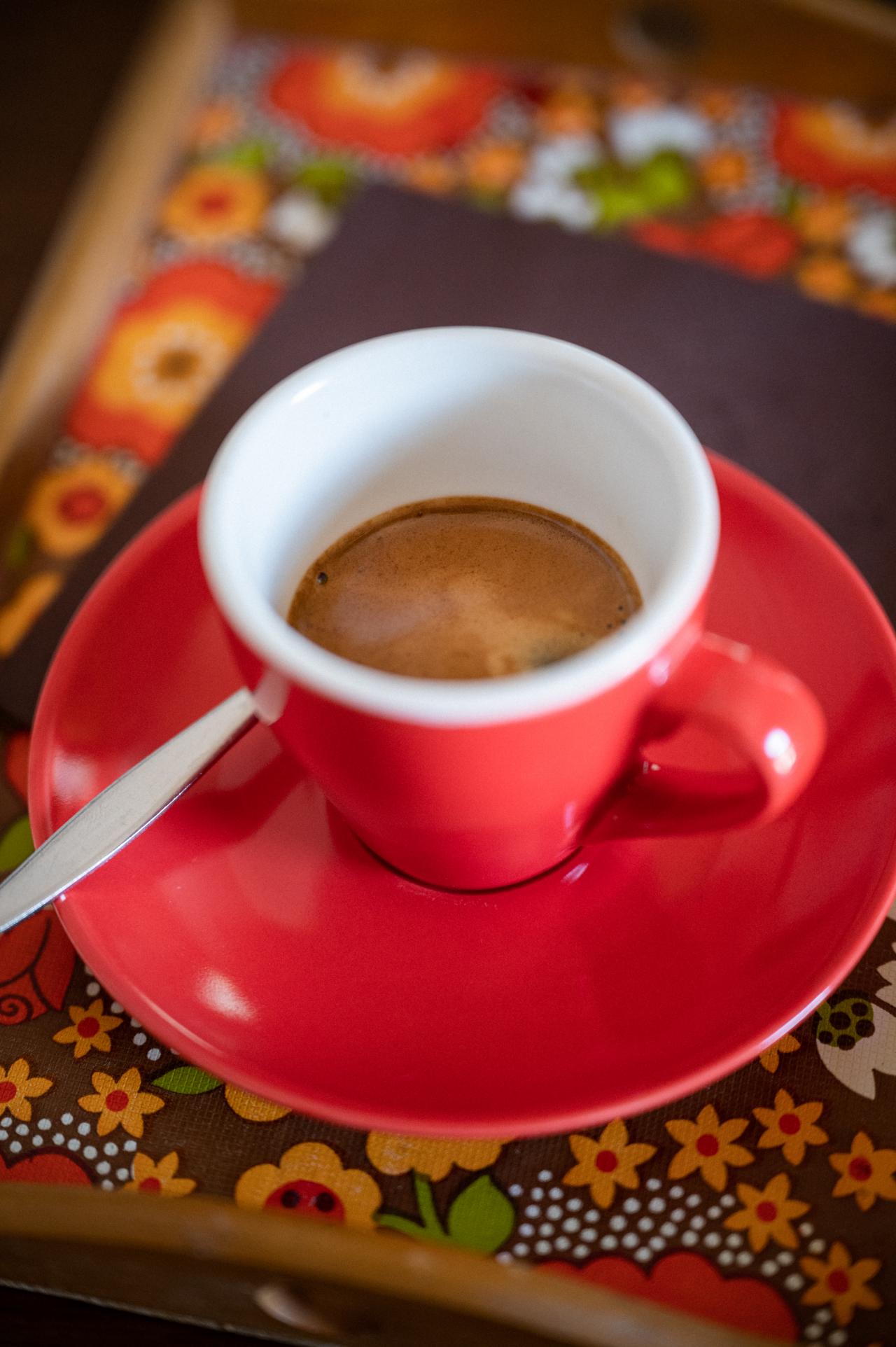
Yann Castagna adds to the habitual consumer behaviour of Luxembourgers: Luxembourg's espresso culture is strongly characterised by Italian, Portuguese and French espresso, which is traditionally roasted very dark. Lighter roasts better respect the characteristic flavours of the bean, but espresso based on light-roasted beans quickly becomes too acidic, especially from espresso machines. Filter coffee, which is very popular among roasters, tends to be frowned upon in Luxembourg. "Filter coffee is a great product if you make it well. But it only works within the niche. If I were to take the coffee truck to the market now and offer people filter coffee, they would reject it. Especially if the espresso machine is next to it, then the coffee has to come from the espresso machine."
Castagna, who works in the south of Luxembourg, especially at markets and events, knows how to adapt to the zeitgeist when it comes to the composition of drinks. The "Starbucks culture" in particular has influenced the way coffee is prepared and consumed. "Demand is growing, but in my opinion, it has also decreased in terms of quality, " he states. It's less about coffee culture and tastings and more about how coffee drinkers enjoy added milk, sugar and syrup. From a business perspective, however, this is an advantage.
Mission sustainability and consumer awareness
Vincent Della Schiava is optimistic about the future. He is observing how consumer behaviour is taking a positive turn and interest in speciality coffee is growing. People are now more thoughtful about which products they want to spend their money on. "It's more attractive for customers to go to local businesses and know that they can get a […] cappuccino for 4 euros, where they know exactly where the beans come from and where they know that the manager is sitting behind the counter and has roasted the coffee himself."
"Good coffee has an exciting flavour profile and is traded at fair prices in direct exchange with the farm."
Thomas Süß, Collette Coffee Craft
Thomas Süß has also observed a growing interest in speciality coffee. The young SCA-trained entrepreneur recently started offering training courses himself, which include learning how to identify the 36 different coffee flavours. "We had a long list of interested parties. They were getting really impatient, " he laughs.
Despite all the measures, caution is still required: "Coffee is not exactly ecologically clean, " warns Yann Castagna. In addition to experiments with alternative coffee based on linseed, for example, there are also the first European coffee plantations, for example in Sicily, but projects like these only prove that things have become much warmer. What matters is a conscious approach to the consumer product. "If you take a conscious approach to the product and consume it consciously, if you respect the entire production chain as a roastery, if you don't sell coffee to maximise profit, but also out of love for the product … then I don't think it's the worst thing in the world. Then there are many positive aspects that balance out the negative aspects. In the end, it's like that with everything: Most of what you do has an impact on the environment, on nature, " he concludes.