"A pessimist very rarely becomes an entrepreneur"
By Sarah Raparoli, Lex Kleren Switch to German for original article
Listen to this article
It's no secret: not all businesses in Luxembourg will survive the crisis. If the first lockdown was just about coped with, the second one was imminent. Entrepreneurs from all sectors are suffering from the current situation and hope that the light at the end of the tunnel will finally get brighter. Nevertheless, there are small success stories or those that could become so. The Lëtzebuerger Journal spoke with two self-employed people who say they have managed the crisis (well) so far.
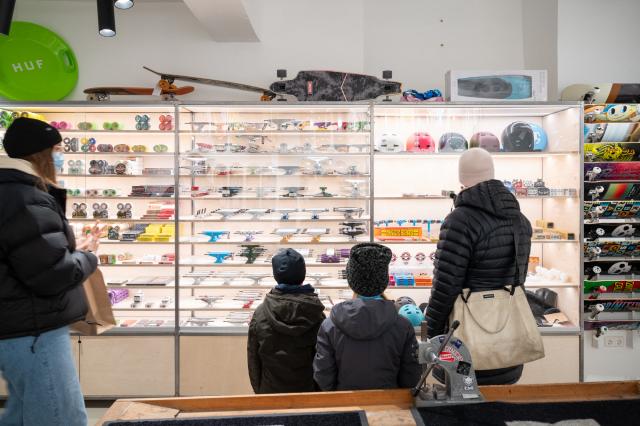
It's cold and wet in the capital. The skate shop Olliewood has only been open for barely half an hour, but is slowly filling up with people – with due regard to current hygiene regulations, of course. It is December 24th, the last day in 2020 that shops in Luxembourg will be open before the new policies enter into force 48 hours later. But the team’s mood around shop owner Dan Gantrel is by no means gloomy. Offering the customer a real "shopping experience" is the skate shop’s motto – even with possible further lockdowns on the doorstep.

Dan Gantrel - Olliewood, Troublemaker & Stitch
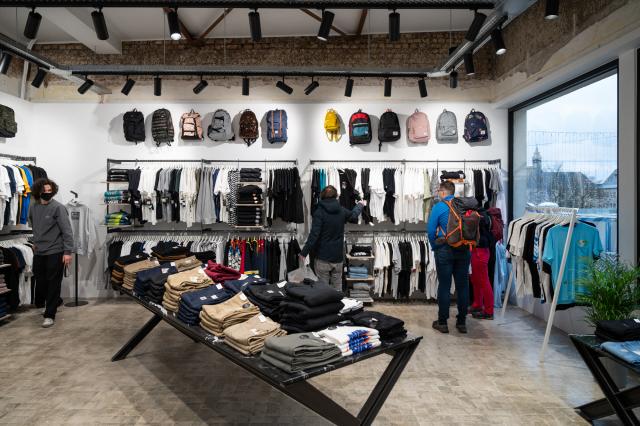
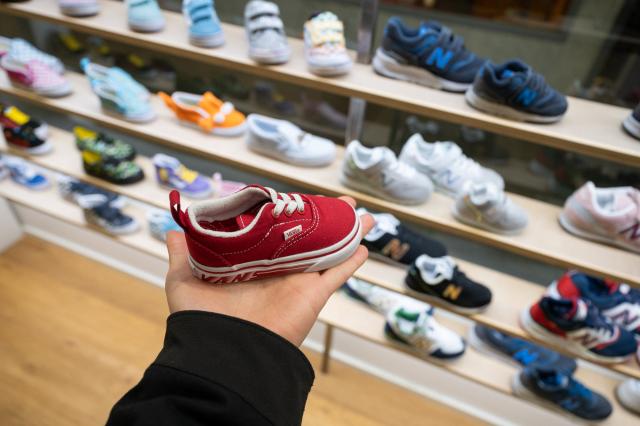
Gantrel has been the owner of Olliewood since 2010, and in mid-October the shop moved to Rue du Fossé. A month later, the new shop Troublemaker found its place in the old Olliewood building on Rue des Capucins, after the store, which specialises in street and skate wear for children, had already opened as a pop-up store for customers in September. He also owns half of the streetwear shop Stitch on Grand-Rue.
2020, year of crisis
“This year was tough as nails”, says the 34-year-old and can't resist a smile. Maybe because he occasionally asks himself how he and his team not only moved one shop in 2020, the crisis year par excellence, but also opened a new one. When asked whether the entrepreneur got through the crisis well, he replies: “Let's leave the ‘well’ aside. We got through it”. There is no question that the shock and the many unanswered questions prevailed at the beginning. What will happen next? Is there enough money to pay the rent for all the shops? Will employees have to be laid off?
A meeting had been called one hour after the announcement of the first lockdown last March. The only way to stay afloat during this time was e-commerce. Problem: Until then, none of the shops existed online. At the beginning of the crisis, the team started from zero and had to improvise. Thus, two separate online shops were created within only two days. According to Gantrel, however, online retail cannot be compared to the real shopping experience.
Give up? Not an option!
Felix Fechter also had to reorientate. The 28-year-old founded a travel agency in the middle of lockdowns, exit restrictions and travel bans. No one could have foreseen the course of 2020, but it quickly became clear to him: Giving up is not an option. “At the very beginning, travels were supposed to go far away. Now I've restructured and offer trips in Europe and Luxembourg”. The “Vakanz doheem” campaign played into the 28-year-old's hands. KEA Travel was able to bring the offer to the customers, and at the same time a nationwide partner network was established.
“I don't have the obligations as someone who has been working for 15 years – family, loans, rent.”
Felix Fechter, founder of KEA Travel
“KEA Travel is not meant to be the conventional travel agency on the shopping street”, explains Felix Fechter. Its individual offer should inspire and convince. The challenge is to make people want to travel again, to take away their fear. Organized travel is safer, especially during times of crisis. If there are problems with bookings or refunds, it is Fechter's job to take care of them.

Felix Fechter - KEA Travel
The sticking point in the coming months, however, will be the quarantine regulations of the individual countries. The young entrepreneur is aware that his industry is in a deep crisis. Instead of burying his head in the sand, he focuses on the positive aspects. “I don't have the obligations as someone who has been working for 15 years – family, loans, rent”. He is currently moving into a co-working space in Bereldingen, so incidental costs are low, he says. Of course, he still hopes to benefit from government subsidies in the future. Since last year’s sales figures are missing due to the recent foundation, he has not been able to claim any of the Corona subsidies so far. In January, entrepreneurs were promised further support. He now hopes that he will be able to apply for it.
“We now have eight months of experience and let's be honest, not much has changed.”
Dan Gantrel, owner of Olliewood, Troublemaker and Stitch, on state aid
Dan Gantrel is bothered by the provisions for financial support. For him, the aids are neither well thought out nor fair. “We now have eight months of experience and let's be honest, not much has changed.” Against this background, he says, it is not surprising to him that many companies are facing ruin. Especially acquaintances working in the Horeca sector are reporting that they would not last much longer. He calls for an interpretation of the facilities which includes every person affected and does not forget anyone. “It was said then, ‘It costs what it costs’ – the government should finally take that to heart”. As the owner of three shops, he has only received state financial support for one of them so far. Another inconsistency that probably does not only affect Gantrel and needs to be re-analysed.
Overcoming hurdles
Another hurdle: due to the pandemic, there were delays in deliveries, and the Troublemaker children's shop officially opened four months later than planned. “As an entrepreneur, you always have to overcome problems”. The shops had not only delivered the goods themselves. During the lockdowns, they also offered customers to pick up their orders independently at the shops. Either way, Gantrel says that direct contact and personal interaction with customers remain a priority.
In addition to the trust and solidarity shown, the motivation of the 25-member team has been the driving force from the beginning. “A family that sticks together. Everyone is valued as a person”. The safety of the employees always comes first. The shop owner grins – in such situations, the trained educator comes to the fore. He did the training to become self-employed over ten years ago more for fun than anything else. Another thing he has in common with Felix Fechter.
He too had another goal in mind: to be a sports teacher. During his studies, however, it became clear to him that this should not be the end of the line. After his first experiences in the travel industry, the decision to start his own business was made. A big step that needed planning. In addition to a mountain of paperwork, a required bank guarantee and other administrative steps, he must always keep one important aspect of self-employment in mind: not giving up. As Dan Gantrel explains, it is not a regular 40-hour job. “You have to live it – especially in the beginning, a lot of time and commitment has to be invested”.
-
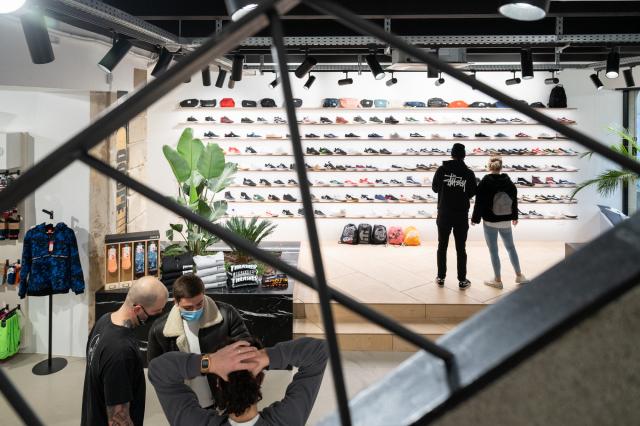
The skate shop Olliewood
-
-
-
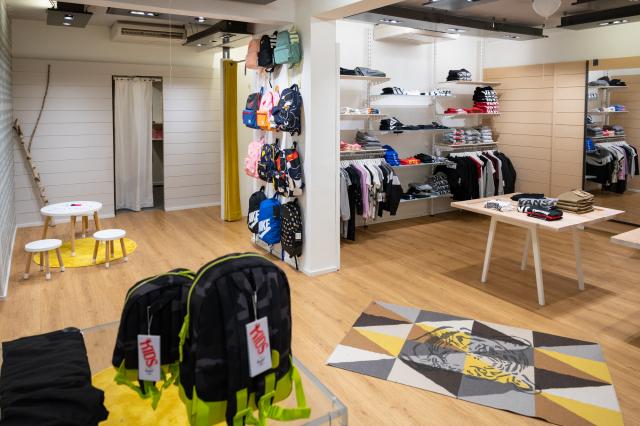
Troublemaker, the street and skate wear shop for kids
-


Of course, everyone is afraid, especially in such extreme situations. But he also thinks that times are never easy. If it weren't for Corona, construction sites would make business more difficult. If it weren't for construction sites, other hurdles would have to be overcome. Entrepreneurs have to be prepared for every conceivable situation and always tackle problems anew. “There is a plan A, but you must always have plan B, C and D ready”. The life of a true entrepreneur.
“The industry will recover slowly, but it will recover.”
Felix Fechter, founder of KEA Travel
Gantrel looks back on ten years of experience, Felix Fechter is still at the beginning. He is nevertheless convinced that the crisis has been a good training and that the coming months will be no different – there is always a risk. “The industry will recover slowly, but it will recover. It will adapt, just like I did”. Entrepreneurship goes hand in hand with a certain amount of risk-taking. When a crisis of such magnitude comes along, the conditions mentioned could act as a deterrent and discourage people from self-employment. “I am well aware that another lockdown can be decided at any time”.
Differentiate oneself
Is the pandemic paralysing start-ups in Luxembourg? Asking Tom Baumert, Director Entrepreneurship at the Chamber of Commerce, his answer was rather optimistic. For him, it is not the case that founders are dissuaded from their vision by shop closures. Those who wanted to start a company, have just done so a few months later. “Affected entrepreneurs have learned a lot, they know how to differentiate themselves and try out new things”. If possible, they should look for ideas to steer their business in a different direction – adapted to the crisis and the restrictions. This is also clear from the fact that (follow-up) questions, which, apart from Corona, also revolve around foundation issues.
The settlement permit
-
Also known as business licence, is granted to the business (the trader or company acting in its own name) within a period of three months. This can be extended by an additional month in certain cases. A permit is required by any person who wishes to engage in one of the following activities as a self-employed person or in the form of a company: a commercial or craft occupation or a predominantly intellectual activity of some liberal professions.
However, he definitely does not want to gloss over the situation. It is an enormous intervention for all areas, a turning point that most have probably never experienced before. “I can't remember anyone ever saying to companies: ‘You can't work for three months now’ – and this is the second or third time in a very short time”, says Baumert, but adds: “A pessimist very rarely becomes an entrepreneur”.

Start-ups are difficult to measure in Luxembourg. One indicator could be the number of settlement permits ("autorisation d'établissement"). Such a permit is necessary for any professional and economic activity in Luxembourg. According to the expert, the number of enquiries understandably dropped during the lockdown. For the month of March 2020, even more enquiries were registered than in April and May.
According to Baumert, the development normalised in June, and in July of last year there was again an increase in corresponding requests, “so that it is very clear that more self-employed people are taking the step”. In 2020, 11,184 establishment permits were requested (date: 19 January 2021). More comprehensive figures come from 2019. 12,014 "autorisations d'établissement" were requested in total, of which 7,905 in trade, 3,507 in crafts and 602 by freelancers, says Baumert.
“If you are motivated, you can achieve anything”.
Dan Gantrel, owner of Olliewood, Troublemaker and Stitch
Science distinguishes between two categories of entrepreneurship. On the one hand there is the ‘entrepreneuriat d'opportunité’, on the other hand the ‘entrepreneuriat de nécessité’. The second category means, for example, that there is no other alternative or that self-employment is the only option for the entrepreneur. An increase will probably be recorded here in the near future. “This was also observed during the financial crisis more than ten years ago”, Baumert emphasises.

Troublemaker
The House of Entrepreneurship of the Chamber of Commerce is the first point of contact for entrepreneurs in most cases. The team also works with partners to cover all areas and offer comprehensive help. In addition to administrative procedures, the business model is also analysed. “There is no such thing as 'one size fits all'. Founders choose what they need”. For example, a non-representative survey shows that of 250 entrepreneurs who founded a company in 2019, around 80 per cent were in contact with the House of Entrepreneurship, says Baumert. “Most of the founders come into contact with us at some point”.
Keeping up with the big ones
So does Felix Fechter. In addition to official advice, the exchange with people who have already taken the leap into entrepreneurship and can provide a real insight into the practice should also be sought. Fechter believes that people who want to realise the dream of starting a business should not be discouraged. “Luxembourg is a country that wants to push start-ups”. However, this dream should not distract from reality. “The costs of starting a business should always be kept in mind. You have to be ready for any situation and be able to react properly – find the right partners and rely on family and friends to support you”. This optimism should lead to KEA Travel making a name for itself in the Luxembourg travel industry in the near future, “to be able to compete with the big players”.
“There is no such thing as 'one size fits all'. Founders pick and choose what they need.”
Tom Baumert, Director Entrepreneurship at the Chamber of Commerce
After a decade in the business, Dan Gantrel can probably say that about himself. Olliewood and Stitch have established themselves, and the same is hoped for with the latest shop, Troublemaker. The crisis has shown once again how quickly everyday life can turn around 180 degrees. The shops were allowed to reopen on 11 January and Gantrel hopes that they will remain open for the next few months. Nevertheless, he says, the past year has made it clear what is possible. “You have to gather all your courage, with every existing risk in mind. If you are motivated, you can achieve anything”.